Tell us about the job
Takes about a minute. No obligation.
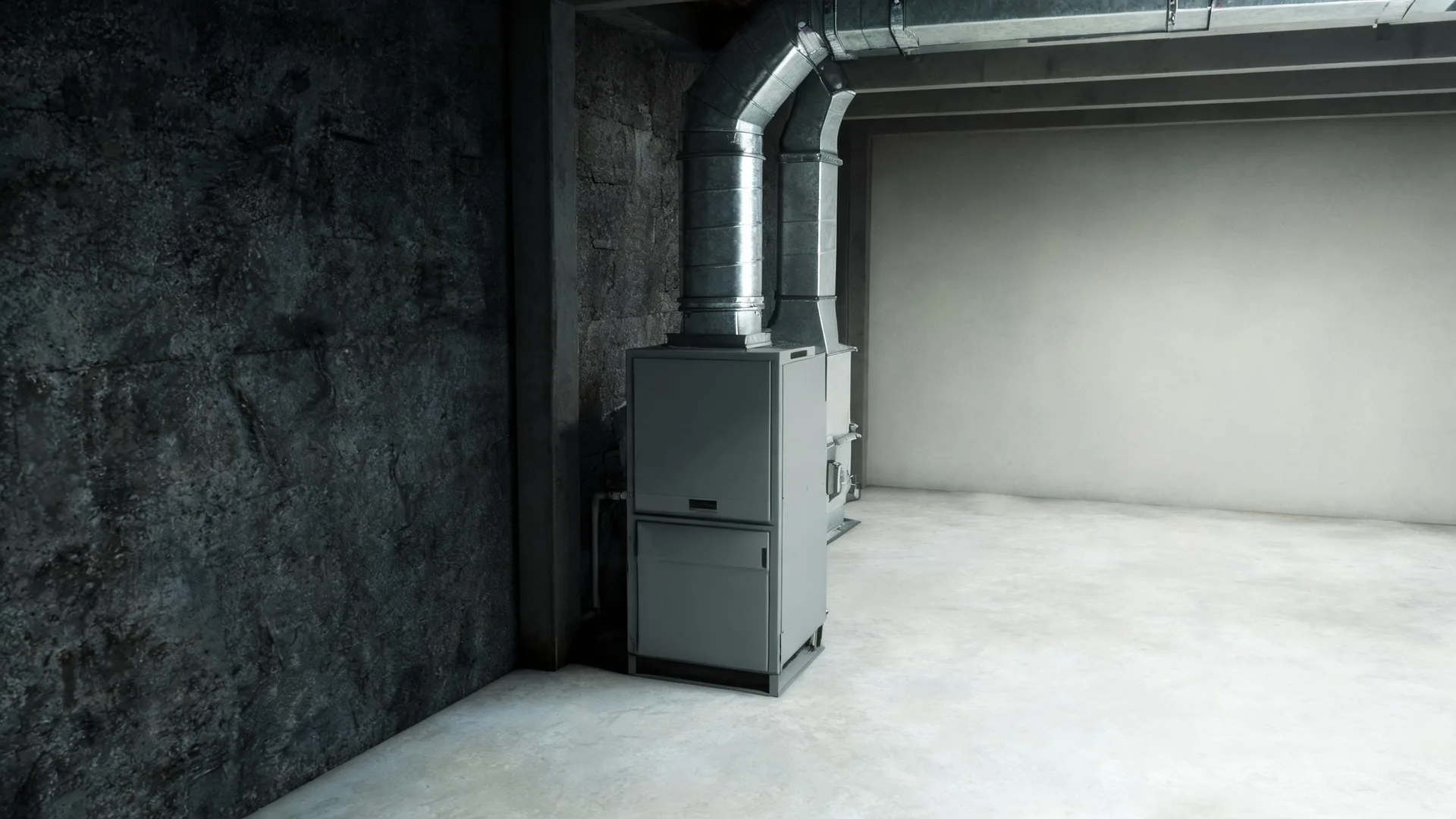
Sizing a furnace for Franklin County starts with what the burner and heat exchanger are being asked to carry through a long heating season. Homes in Franklin County, MA run heat about eight months a year, from October through May. A contractor quoting a new install has to calculate the actual load the house places on the equipment, because a unit that runs undersized through that kind of cold accumulates stress on the ignition system and heat exchanger faster than the manufacturer's service intervals assume. Poor ductwork or a miscalculated fuel input shows up as uneven heat and short-cycling, and neither goes away on its own.
Ductwork in houses built for an earlier generation of heating equipment was sized around what that equipment moved, and a new furnace with a different output and different static pressure requirements does not automatically inherit a working distribution system. Half the homes in Franklin County, Massachusetts were built in 1962 or earlier (2020-2024 ACS 5-year). That history shows up when a contractor pulls the old unit and measures what the existing trunk lines can actually carry, which is the point where the scope of an installation job either holds or expands. Electrical service gets checked against what the new furnace draws. Duct sizing gets checked against what it has to move.
What Gets Installed With a New Furnace
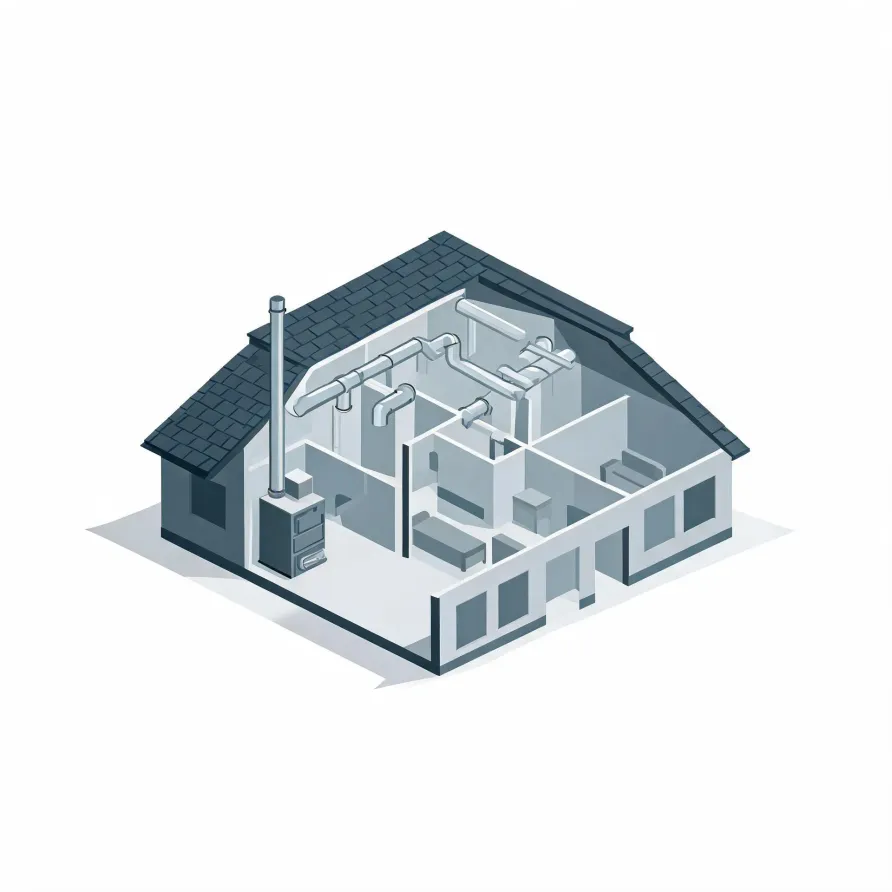
The furnace itself sits inside the house, almost always in a basement, utility room, or closet. It is the central unit that generates heat by burning fuel or running electrical elements through a heat exchanger, then pushing warm air out into the home. The flue or exhaust vent runs from the furnace to the outside, carrying combustion gases away.
The air handler components built into or paired with the furnace include a blower that moves conditioned air through the supply side of the system and draws return air back in. The thermostat mounts on a wall in the living space and is the control point that tells the furnace when to run. A filter housing sits at the return-air intake, and a condensate drain line runs from the system to a floor drain if the furnace is a high-efficiency model.
The drawing shows the general layout of these components, and a licensed contractor determines exactly what applies to this house.
Get matched in Franklin CountyFranklin County, by the numbers
362 severe weather events were recorded in Franklin County, Massachusetts between 2015 and 2024.
NOAA National Centers for Environmental Information, Storm Events Database, bulk CSV export, events 2015-01-01 through 2024-12-31.Half the homes in Franklin County, Massachusetts were built in 1962 or earlier (2020-2024 ACS 5-year).
U.S. Census Bureau, 2020-2024 American Community Survey 5-Year EstimatesFranklin County, Massachusetts holds 34,528 housing units (2020-2024 ACS 5-year).
U.S. Census Bureau, 2020-2024 American Community Survey 5-Year EstimatesOwners occupy 70.1% of the occupied homes in Franklin County, Massachusetts (2020-2024 ACS 5-year).
U.S. Census Bureau, 2020-2024 American Community Survey 5-Year EstimatesFurnace & HVAC Installation Rules on the Books for Franklin County, Massachusetts5 codes & standards
What the installation actually looks like
Non-weatherized gas furnaces manufactured on or after November 19, 2015 must reach 80.0 percent AFUE.
Non-weatherized oil-fired furnaces manufactured on or after November 19, 2015 must reach 83.0 percent AFUE.
Mobile home gas furnaces manufactured on or after November 19, 2015 must reach 80.0 percent AFUE.
Non-weatherized gas furnaces manufactured on or after December 18, 2028 must reach 95.0 percent AFUE, up from the 80.0 percent minimum that applies to units manufactured before that date.
Licensing and Legal Requirements in Franklin County, Massachusetts
Massachusetts requires a state licence to work as a refrigeration technician, and to work as a pipefitter or sprinkler fitter.
Weather Stress on HVAC Equipment in Franklin County
Furnaces in Franklin County work against whatever the local climate demands, and that demand shapes how hard a system has to run and how long it holds up. Equipment sized and installed without that context is equipment that may not last.
362 severe weather events, 2015–2024. Source: NOAA National Centers for Environmental Information, Storm Events Database.