

Why your furnace keeps turning on and off in Massachusetts

One request and the search for a pro is handled.

Let a pro reach out

A furnace that keeps cycling on and off, sometimes called short cycling, usually comes down to heat building up too fast inside it. A clogged filter, a cracked heat exchanger, or a blower motor that isn't moving enough air can all make the furnace overheat and shut itself down before it finishes a normal cycle. A bad thermostat or a furnace that's too big for the house can cause the same thing. During a Massachusetts winter, a furnace that won't stay running means rooms never get warm and the system works harder to make up for it, which shows up on a gas bill that's already high for the season. It also wears the parts out faster, since every shutdown and restart puts stress on the igniter and the blower. The fix depends on which part is causing it, and that's something worth having looked at before the cold settles in for good.

A gray high-efficiency furnace in a basement with sheet-metal ductwork, white PVC vent pipes, metal plumbing lines, a condensate pump on the floor, and a window showing green trees outside.

Running the way it should

A furnace that's cycling normally fires up, runs a full heating cycle, and shuts off once the house reaches temperature. Air moves steadily through the ducts. The filter is clean, the blower runs quiet, and the flame sensor keeps the burner lit for as long as it needs to.


An older metal furnace with PVC and metal pipes stands on a concrete basement floor beside galvanized ductwork, with wooden stairs and a water tank in the background.

Shutting off too soon

A furnace short cycling fires up, runs a few minutes, and quits before the room ever warms. It does this again and again through the night. Dust built up around the burner, a weak flame sensor, or a blower not pulling enough air can all be behind it.

A smiling man in a dark navy sweater sits on a light sofa in a living room, with a glass bowl of popcorn on a wooden coffee table and bookshelves behind him.
A smiling man in a dark green sweater sits on a tan leather sofa in a dimly lit living room, with a bowl of popcorn in the foreground and a kitchen area blurred behind him.
A smiling middle-aged man in a dark shirt sits on a gray sofa in a living room, with a bowl of popcorn on a side table and shelves, a window and kitchen area behind him.
A smiling bearded man in a dark gray t-shirt sits on a gray couch in a living room, with a large glass bowl of popcorn on a wooden table in the foreground.

Why the flame sensor matters most

The flame sensor is a thin metal rod sitting in the burner flame. Its only job is to confirm the burner is actually lit. A coating of soot or oxidation on that rod can make it misread a good flame as no flame at all, so the furnace's control board shuts the gas valve down as a safety measure, then tries again a few minutes later. That restart loop is what you're seeing as short cycling. It's a cheap part and a small job for a technician, but it's also one of the most common reasons a furnace that used to run fine starts cutting out every few minutes.

What a dirty filter does inside

A furnace pulls return air across a heat exchanger, and that metal surface needs steady airflow to carry the heat away into your ducts. When a filter is packed with dust, less air gets through, so the exchanger holds onto heat instead of releasing it. A high limit switch is built to sense that and cut the burner off before the metal cracks. Replace the filter and the switch usually stops tripping. Leave it clogged through a Massachusetts winter and the furnace will keep shutting off early, running longer to hit the same temperature, and costing more on a power bill that's already among the highest in the country.

A woman with dark hair in a bun reclines on a sofa with her eyes closed, wrapped in a cream fleece blanket, a closed blue hardcover book resting in front of her, with a lit lamp and a vase of dried flowers in the background.
A smiling bearded man in a navy sweater sits at a candlelit dinner table with a glass of red wine, a bowl of salad, and plates of food in the foreground.
A gray high-efficiency furnace with two white PVC vent pipes stands against sheet-metal ductwork in an unfinished basement with concrete floor and walls and exposed wood joists.

Finding a pro stops being your job

Fill out one short form instead of calling around.

Send it once and finding someone is no longer on you.

Describe it once

You're not committing to anything by asking.

Why does my furnace shut off after only a few minutes?

A few minutes of heat, then quiet, then it fires again a little later. You've timed it without meaning to, sitting there in the evening watching the thermostat. It's not warming the house the way it should, and running this often on gas in a Massachusetts winter is not what you signed up for when the system was installed.

Something is tripping the furnace's own safety switch before the cycle finishes

A furnace has a limit switch that watches the temperature inside the cabinet. If that temperature climbs too fast, the switch cuts the burner to keep the heat exchanger from cracking. A few minutes is often all it takes if airflow is restricted, because the burner keeps adding heat with nowhere for it to go. A dirty filter is the most common reason, but closed supply vents or a blower set too low will do the same thing. Once the cabinet cools back down, the limit switch resets and the furnace fires again, which is why it feels like it's cycling on a timer instead of heating the house through.

A basement utility area with a gray furnace, sheet-metal ductwork, pipes, plastic-covered walls, a concrete floor, and a black shelving unit holding storage bins.

Clean burn, steady air

This is a furnace moving air the way it should. The ductwork is intact, the gas line is secure, and the cabinet shows no rust or wear. Air comes out of the vents warm and steady, and the furnace holds a full cycle before it shuts off on its own.

A gray metal furnace with louvered vent panels stands on a concrete basement floor beside galvanized ductwork, gas and plastic pipes, and foil-faced insulation along the ceiling and wall.

Rust, age, and short cycles

This cabinet has surface rust and years on it. Rust like that can mean moisture has been sitting somewhere it shouldn't, inside the cabinet or around the heat exchanger. An older furnace working harder than it should will often cut its cycle short instead of running the heat through properly.

A beige furnace with two access panels stands against a concrete basement wall, with galvanized sheet-metal ductwork, a white PVC pipe, flexible conduit and insulated ducting around it.
Before you get your furnace repair
A gray furnace with white PVC vent pipes stands beside sheet-metal ductwork in a basement with a smooth concrete floor, exposed wood framing, and plastic sheeting on the walls.
After you get your furnace repair
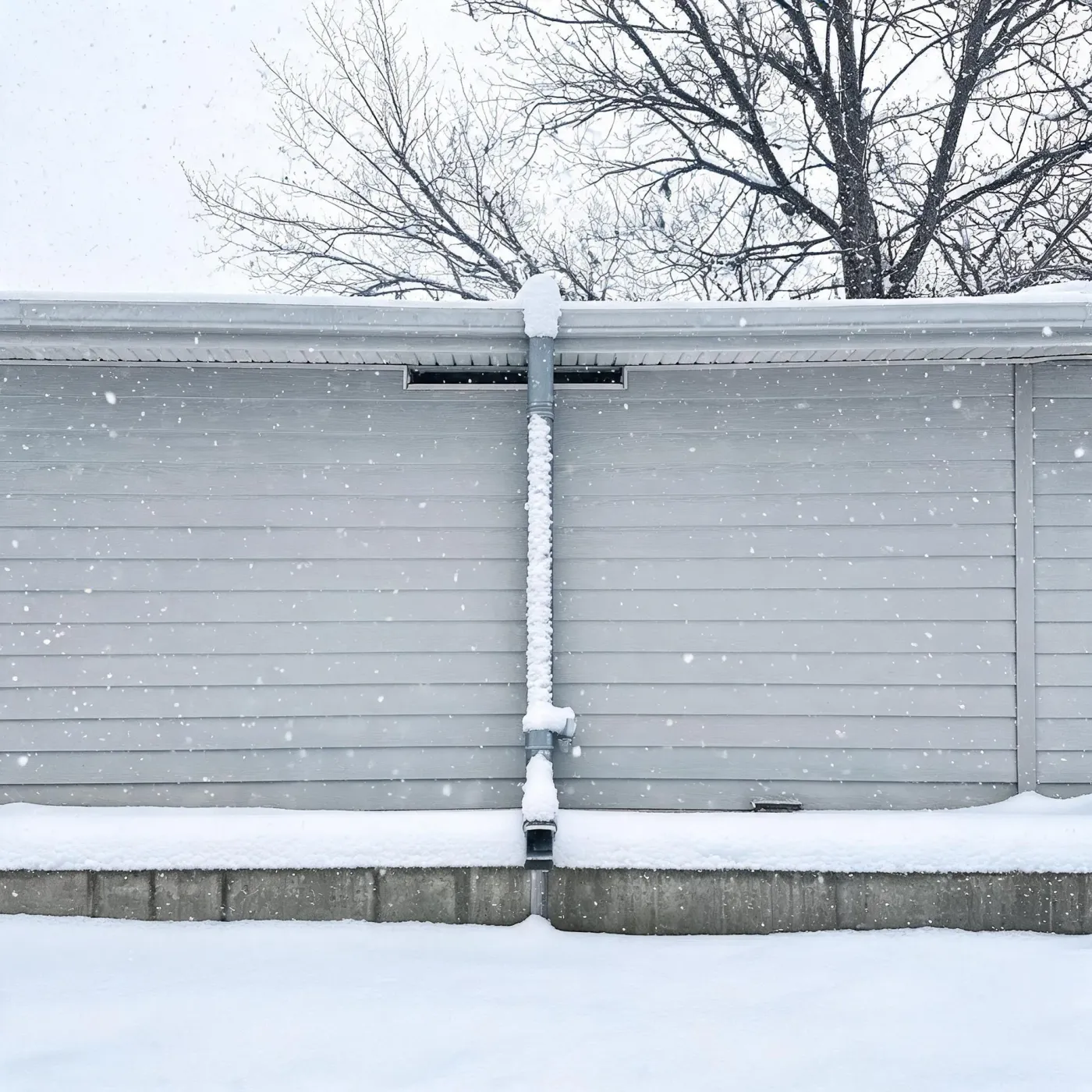
Exterior wall of a building with light gray horizontal siding and a snow-covered downspout running down its center, with bare trees behind the roofline and falling snow over deep snow on the ground.

On a statewide average, winter nights sit at 21°F, according to NOAA. That's cold enough that your furnace isn't just topping off heat, it's running long, steady cycles to keep up. When something inside it is forcing short cycling instead, the furnace is working harder for less warmth on exactly the nights you need it most. You might notice rooms that never quite reach the set temperature, or the furnace clicking on again minutes after it shut off. On a mild afternoon that same problem might go unnoticed. At 21°F, it shows up fast, and it shows up in the gas bill too.

NOAA nClimDiv 1991-2020 county normals weighted by homes

A closed laptop and a cream mug of coffee on a coaster sit on a dark wooden table, with a potted plant at left and a kitchen counter, tiled backsplash and shelf of ceramics in the background.

A furnace that short cycles needs a hand, not a guess

A furnace that keeps shutting off early is telling you something is wrong inside it. Not the thermostat, not the weather, not the house. Something in the furnace itself is forcing it to stop before the job is done, and on a 21°F night that matters, because every short cycle is heat the house didn't get. The fix depends on which part is causing it, and that's not something to settle by guessing twice more.

You could spend an evening looking up furnace repair companies, calling the ones with a phone number listed, and explaining the same thing three or four times before anyone can even tell you what it might be. Send the form instead and that search is done. You won't be the one tracking down who's licensed, who answers, and who can actually get to a furnace that's cutting out on you in the middle of winter.

Interior corner of a room with a window and sheer curtain at left, a gray upholstered sofa with a cushion at right, and a round wooden table holding stacked books and a round vase with an olive branch.
A gas furnace with attached PVC and metal piping and sheet-metal ductwork stands on a concrete pad in a dim unfinished basement with concrete walls and exposed floor joists.

Let someone else find the pro

Explain the job once and skip repeating it on every call.

Step 1 of 3: Equipment