

When a furnace flame sensor needs cleaning in Massachusetts

One request and finding someone for the tune-up is handled.

Hand it off

How often should the flame sensor on my furnace be cleaned?

You've had the furnace running for a while now and maybe noticed it clicking off on its own, or a repair tech mentioned the flame sensor last time they were out. Massachusetts winters put a lot of hours on a gas furnace between October and April, and you want to know if this is a once-and-done thing or something that needs attention on a schedule, before the cold months really set in.

Once a year, before heating season starts

A flame sensor should be cleaned once a year, ideally in the fall before you're relying on the furnace every day. The sensor sits in the burner flame and tells the control board the flame is lit. Over a season of regular use, it builds up a layer of soot and oxidation that keeps it from reading the flame correctly, even though the flame itself is fine. Once that coating forms, the furnace may fire for a few seconds and then shut off, or refuse to stay lit at all. With gas heat running for months at a stretch across a Massachusetts winter, that buildup happens every year without fail. A yearly cleaning during a fall maintenance visit catches it before the first cold snap, rather than during one.

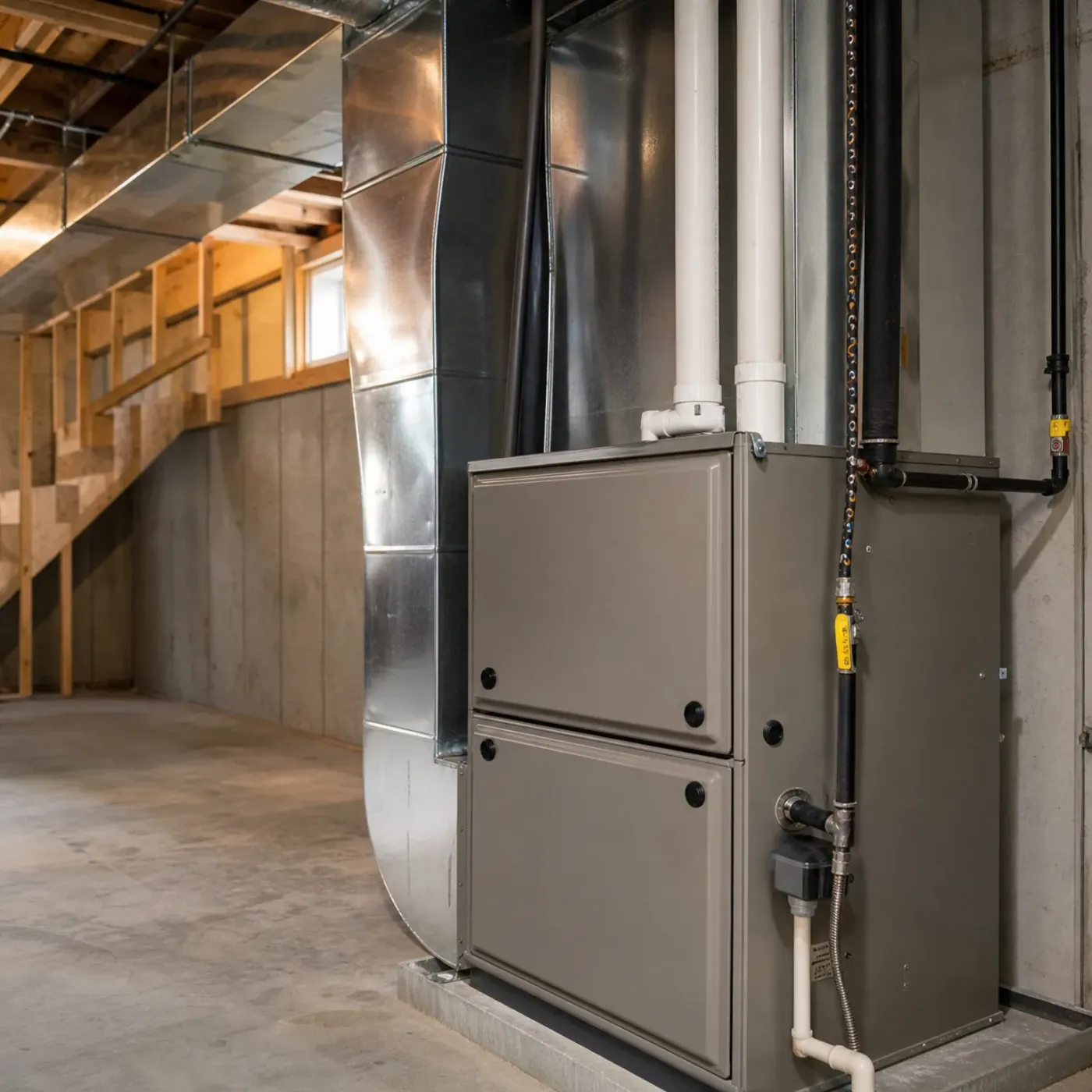
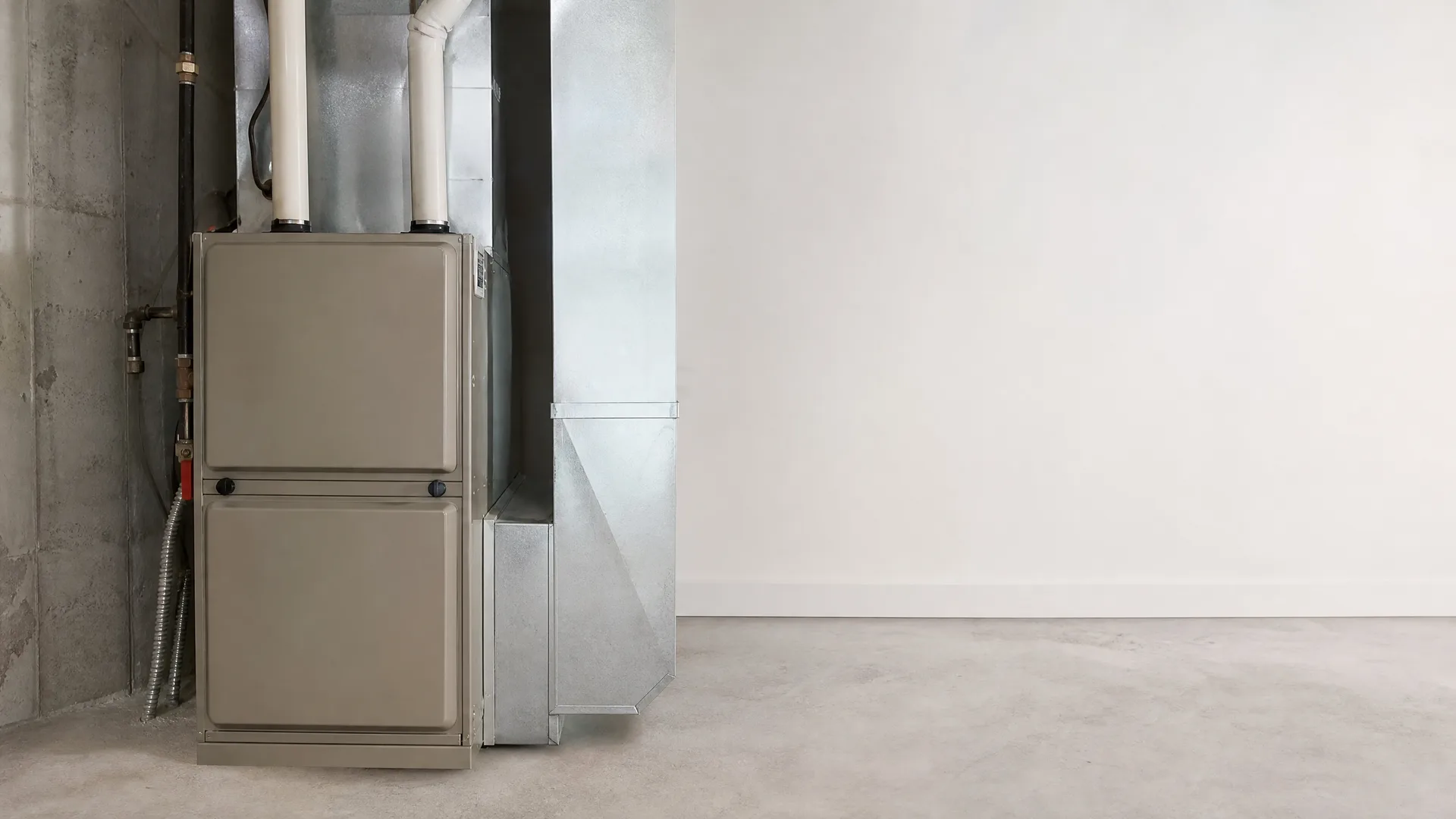
A beige high-efficiency furnace with two white PVC pipes stands beside sheet-metal ductwork and a concrete wall in an empty basement with a bare light-colored wall and concrete floor.

What the flame sensor actually does

The flame sensor is a thin metal rod sitting in the burner flame. It proves to the control board that gas is actually burning, not just flowing. A coating of carbon or rust on that rod blocks the tiny electrical signal it sends. The board reads that as no flame, even though the burners are lit, and shuts the gas valve down. That's the clicking off you're hearing. It isn't a sign the furnace is failing. It's the safety doing exactly what it's built to do.

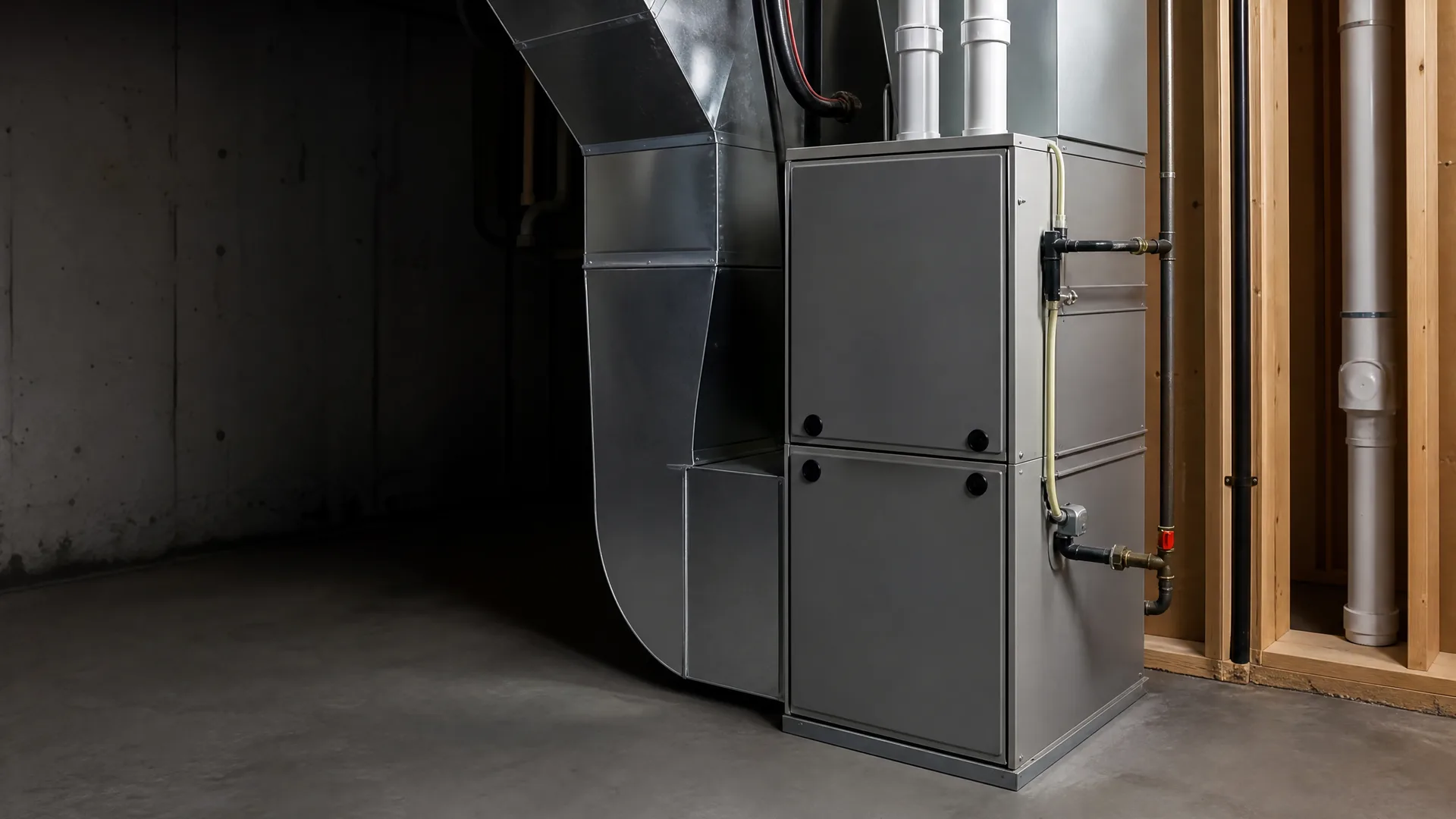
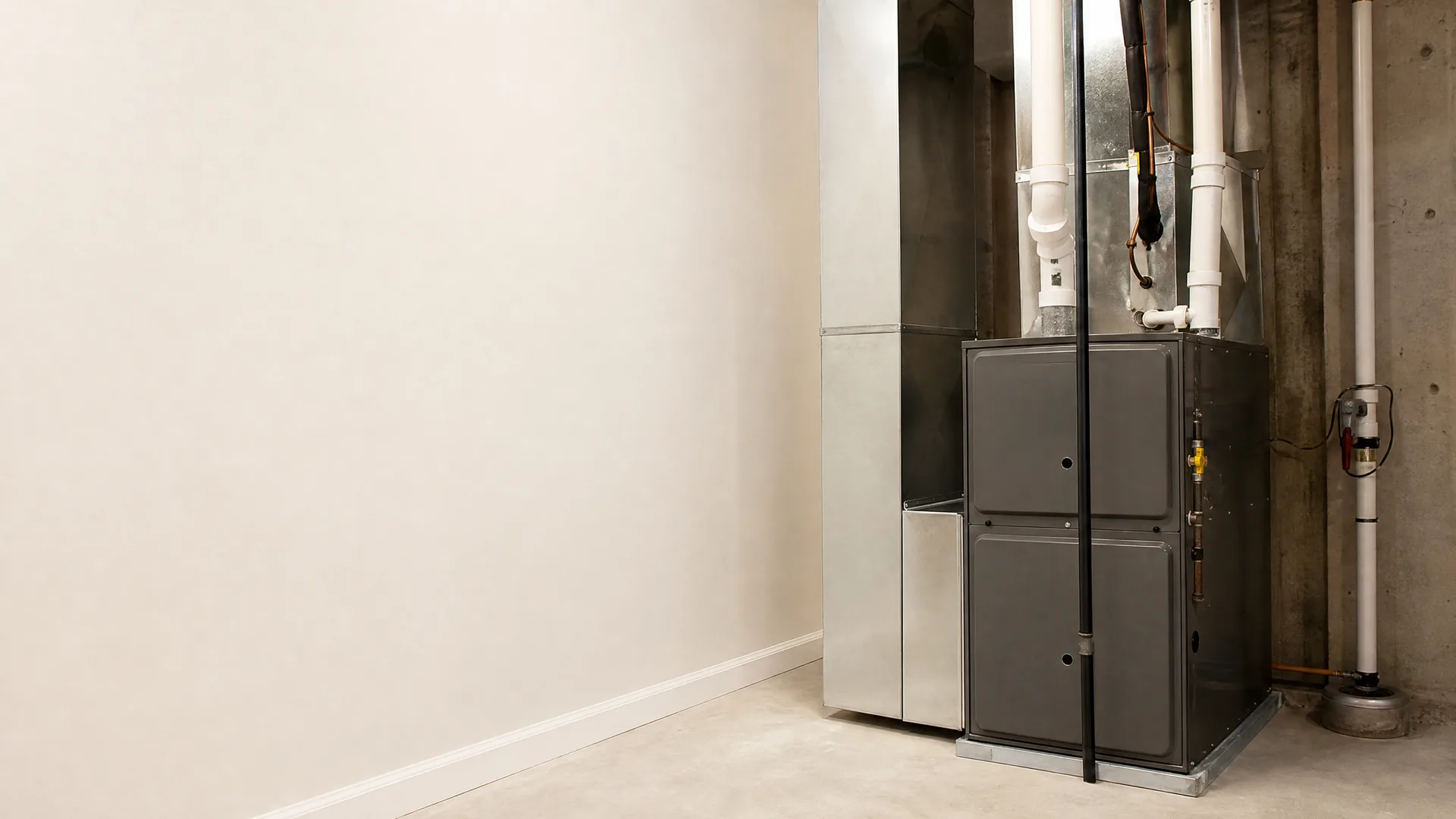
A gray furnace with sheet-metal ductwork and white PVC vent pipes stands in the corner of a finished basement room with a blank beige wall and concrete floor.

Why it coats up over a winter

Every time the burners fire, they throw off a small amount of byproduct, and some of it lands on the sensor rod. One cycle doesn't matter. Hundreds of cycles over a Massachusetts winter build a layer thick enough to interrupt that signal. A furnace running from October through March can fire several times a day, so the buildup that takes a cleaning the following fall accumulates faster here than in a climate where the furnace barely runs at all.

Clean It Yourself or Call a Tech

Clean it yourself

  • You need to shut off power to the furnace first, then pull the sensor out, usually one or two screws holding the bracket.
  • A light pass with fine steel wool or a scouring pad takes the carbon off the rod without scratching the metal underneath.
  • If you put the sensor back wrong or over-tighten the screw, you can crack the porcelain insulator around it.
  • This only helps if carbon buildup is the actual problem. A cracked sensor or a bad flame signal from somewhere else in the system won't improve.
  • Doing it once doesn't mean it's done. If the furnace trips out again a few weeks later, something else may be going on.

Have a tech clean it

  • A tech who services furnaces all winter here knows the flame sensor is one of the first things to check when a furnace short-cycles.
  • Cleaning the sensor is usually bundled into a fall maintenance visit, so the burners, igniter and blower get looked at the same trip.
  • A tech can read the flame sensor's microamp signal with a meter, so you find out if the rod itself is the problem or something else is.
  • One company handles the visit, so you're not fielding calls from several contractors trying to book the same job.
  • If the sensor itself is cracked or worn thin, a tech replaces it on the spot instead of sending you back to clean a part that won't hold up.
A gray high-efficiency furnace with white PVC venting pipes stands on blocks in a basement next to sheet-metal ductwork, with exposed wood framing on the left and a concrete wall and floor.

A clean sensor keeps the burners running

The flame stays lit, the burners cycle the way they're supposed to, and the furnace heats the house straight through a Massachusetts winter without any shutdowns. The exhaust and gas lines you see here are doing exactly what they should.


An older gas furnace with two white PVC vent pipes stands on a concrete basement floor beside galvanized sheet-metal ductwork, flexible conduit, and piping along a wall.

A dirty sensor shuts the furnace down

Once that rod is coated enough, the control board stops seeing proof of flame and cuts the gas off, even though everything else in the cabinet looks fine. The furnace will keep trying to start and keep failing until the sensor is cleaned.

An older man with gray hair and a navy knit sweater sits in an armchair with his eyes closed, near a bright window with potted green plants.
A woman in a cream knit sweater sits in an armchair indoors, eyes closed and smiling, beside a window showing yellow and orange autumn foliage, with a mug on a wooden side table and shelves holding vases behind her.

The signal running through that rod is tiny, measured in microamps, so it doesn't take much to block it. A furnace that fires, runs a few seconds, then shuts off and tries again is usually telling you the control board isn't seeing flame anymore. The board watches for that signal right after ignition, and if it doesn't find it, it closes the gas valve. That's the furnace protecting itself, not malfunctioning. Carbon doesn't build up evenly either. If the bracket holding the sensor has shifted even slightly, that spot in the flame fouls faster, and a rod you just cleaned can coat right back over. Dust plays a part too. The same dust a dirty filter lets through the return duct settles on the sensor the way it settles on the burners. And not every dirty-looking rod just needs wiping down. If the metal underneath is cracked or pitted once the carbon's off, that sensor needs replacing, not another cleaning.

How the sensor actually fails

  • The flame sensor runs on microamps, a signal so small that even a thin film on the rod can interrupt it.
  • A furnace that locks out after running a few seconds, then tries again and locks out again, is almost always reading a dirty sensor.
  • The control board checks for that flame signal within seconds of ignition, and no signal means it shuts the gas valve as a safety measure.
  • Carbon builds up fastest on a sensor that's slightly out of position in the flame, so a clean rod can still foul again quickly if the bracket shifted.
  • A sensor rod that's cracked or visibly pitted under the carbon needs replacing, not just cleaning.
  • Dust pulled in through the return duct settles on the rod the same way it settles on the burners, so a furnace running on a dirty filter fouls its sensor faster.
A man in a navy sweater reclines with closed eyes in a beige armchair in a living room, with a lamp, wooden cabinet, bookshelf, potted plant, and a side table holding a newspaper and mug nearby.
A man in a blue henley shirt reclines on a leather chair with his eyes closed, beside a window, a houseplant, a side table with a newspaper and a dark mug.
A man in a gray sweatshirt reclines with his eyes closed in a dark leather chair, with a bookshelf behind him and a side table holding folded newspapers, a mug, and a potted plant by a window.
A man in a blue sweater leans back on a brown leather chair with his eyes closed and a slight smile, in a room with bookshelves, framed pictures, a potted plant by a window, a folded newspaper and a dark mug on a table.
A gray high-efficiency furnace in an unfinished basement, connected to large galvanized sheet-metal ductwork, PVC vent pipes, a gas line and flexible conduit, with concrete walls, wood framing and a staircase in the background.

Done looking for a furnace pro

A licensed local pro takes the request for your furnace tune-up.

Send the form, and lining up the furnace tune-up stops being yours to chase.

Hand off the search

You only hire the pro if you want to.

A beige high-efficiency furnace stands on a concrete basement floor beside sheet-metal ductwork, with white PVC vent pipes, flexible conduit and copper and steel piping running up a concrete wall to an electrical box.
A sensor that's been wiped clean lets the furnace run straight through, burners lit and ductwork moving warm air with no interruptions.
An older gas furnace with a louvered front panel stands on a concrete basement floor beside large sheet-metal ductwork, a metal flue pipe, copper piping and wood framing.
Dust builds up around a furnace that keeps shutting down, because nobody's climbing down to the basement to check the sensor until the house goes cold.
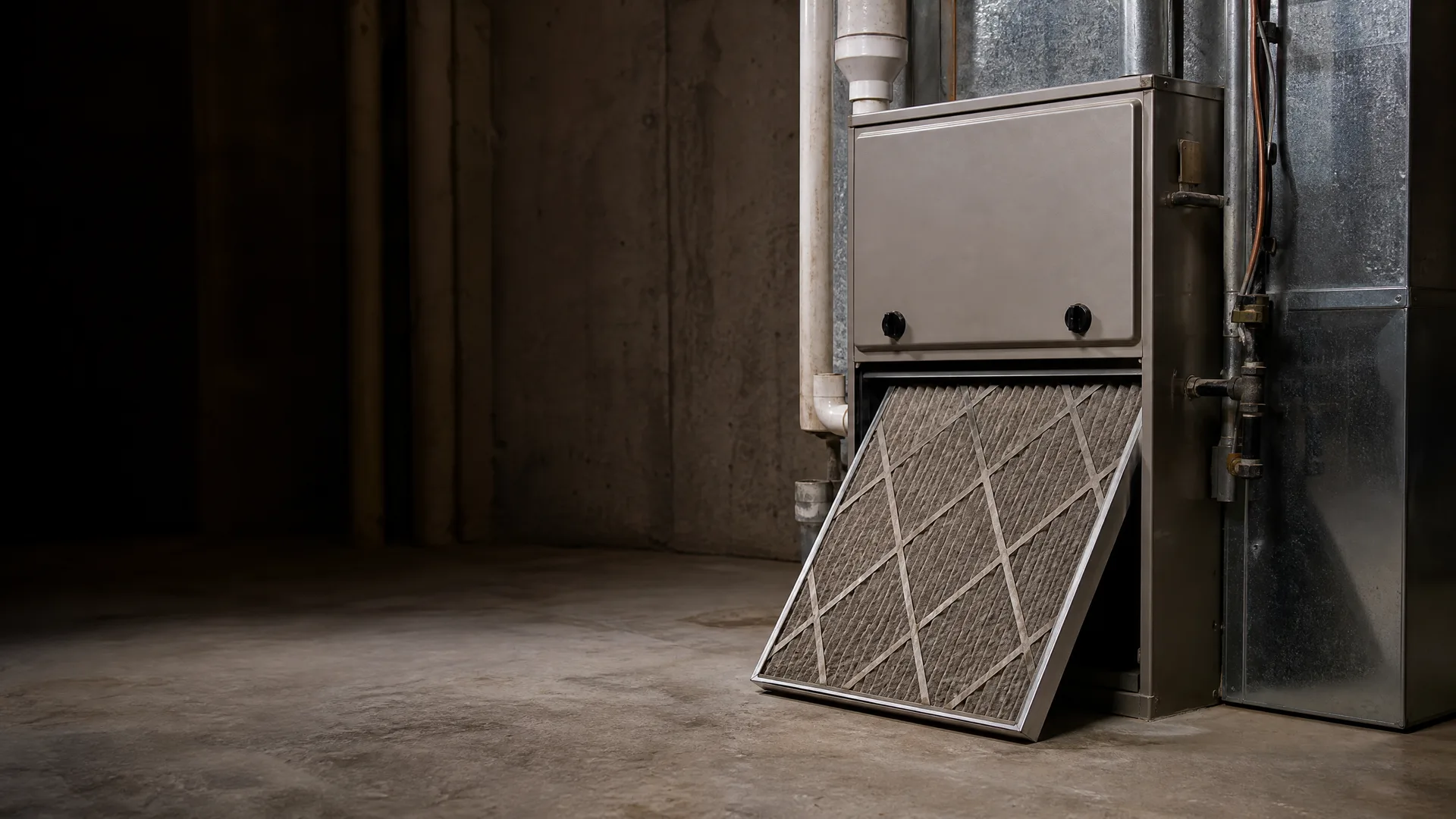
A dirty pleated air filter leans against a furnace with metal ductwork in a dim concrete basement.

You're down in the basement on a Saturday afternoon in October, finally getting around to the filter before the cold sets in. It's grey with a season's worth of dust, and sliding it out stirs up a little cloud in the light from the bare bulb. The furnace sits quiet behind it, not running yet, the first real test still a few weeks off. You notice the sensor rod through the cutout, dull and coated where it sits in the burner. You make a note to pull it out and wipe it down before you close the filter slot back up.

Why does your furnace keep shutting off and restarting?

You turn the thermostat up and the burners light, run for a few seconds, then cut out. A minute later it tries again. Same thing. Sometimes the blower keeps pushing air that's gone lukewarm instead of warm. You might notice the house never quite catches up to the temperature you set, especially on the colder nights, or that a room that used to heat fine now lags behind. If this keeps happening through a Massachusetts winter, the furnace is working harder and running longer to make the same heat, and on top of already expensive power, that adds up. Left alone, the short-cycling tends to get more frequent, not less, until the furnace won't stay lit at all.

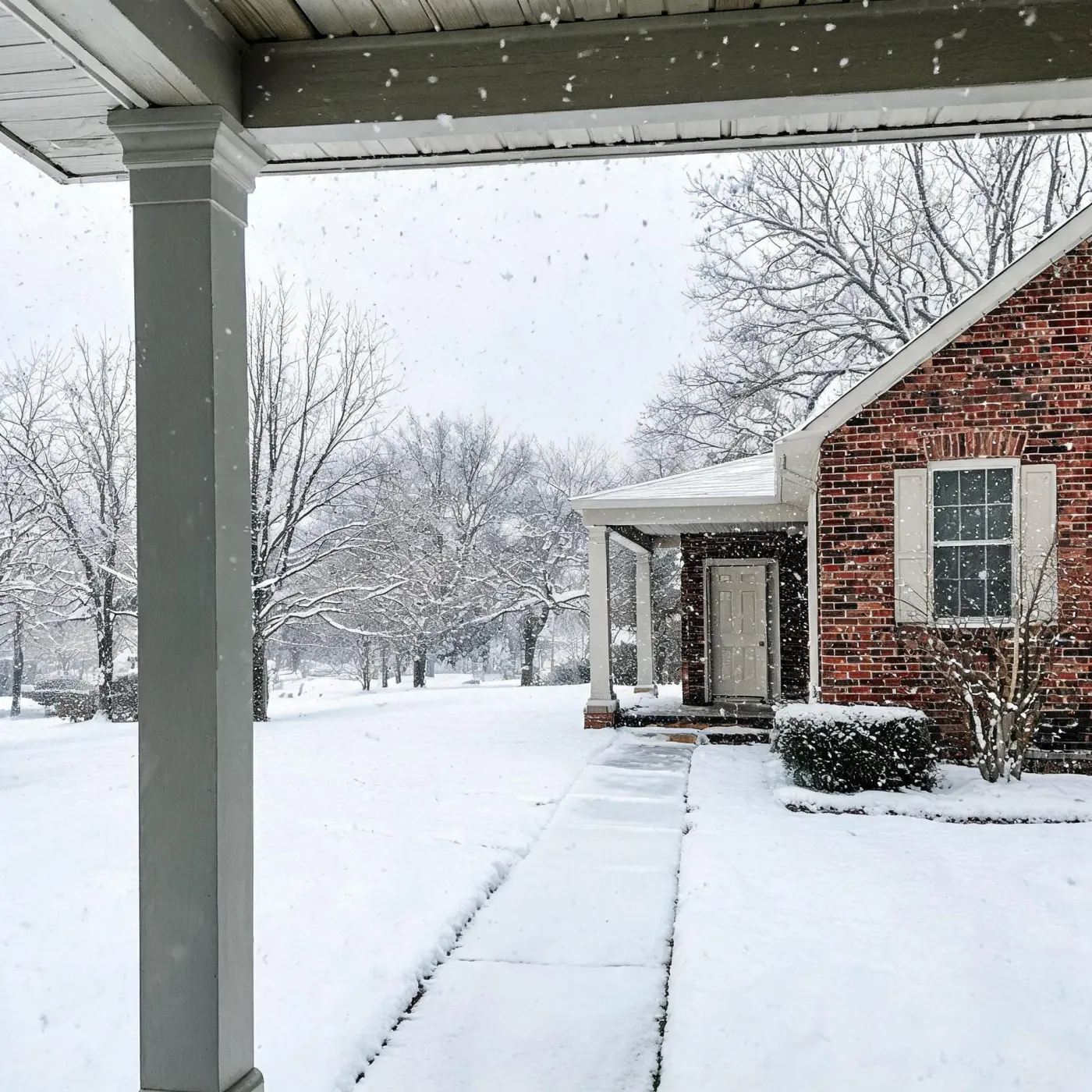
View from under a covered porch with a white column toward a brick house with a white front door and shuttered window, with snow falling and covering the lawn, walkway, shrubs, and bare trees.

Winter nights statewide average 21°F, according to NOAA. That's not an overnight dip, it's the average, which means your furnace is running long stretches to keep up on most nights from December through February. A dirty flame sensor is more likely to show itself on a night like that, because the burners are cycling on and off so often to hold the temperature. Each failed attempt to relight is another chance for the control board to lock out. If you've noticed the furnace trying twice before it catches, or shutting down around 2 a.m. and leaving the house cold by morning, a sensor that's overdue for cleaning is a reasonable place to start looking.

NOAA nClimDiv 1991-2020 county normals weighted by homes

A beige sheet-metal furnace with a louvered upper panel stands on a concrete basement floor, connected to galvanized ductwork, white PVC vent pipes, and a metal gas line with an electrical box.
Before you get your furnace maintenance
A gray high-efficiency furnace with white PVC vent pipes stands in an unfinished basement beside sheet-metal ductwork, gas piping, and insulated stud walls on a concrete floor.
After you get your furnace maintenance

What the microamp signal tells the board

  • The flame sensor's job is to shut the gas off, not to keep it burning.
  • A good sensor reads somewhere around 2 to 6 microamps once the flame is lit.
  • Below that range, the control board decides there's no flame even if there is one.
  • The board waits about a second before it reacts to a lost signal, so shutdowns happen fast.
  • Most sensors pick up enough carbon over a single heating season to need a cleaning.
  • Furnaces that run long hours, like through a Massachusetts winter, build up that coating faster.

The flame sensor doesn't make the furnace run. It's there to prove the flame is real, and if it can't prove that, its job is to cut the gas off. That's backwards from what most people assume, and it's why a dirty sensor doesn't dim the flame or slow the furnace down. It just shuts it off. Once the burners light, the rod picks up a small current running through the flame itself, usually somewhere around 2 to 6 microamps. The control board is watching that number. Carbon buildup on the rod acts like insulation, and it doesn't take much before the signal drops below what the board will accept. At that point the board doesn't wait around. It gives the signal about a second to come back, and if it doesn't, it kills the gas valve. That's the clicking off you've noticed. It's not a delayed reaction to a bigger problem, it's the board doing exactly what it's supposed to do with the information it's getting. A furnace that sits idle most of the year might go a couple of seasons before that coating is thick enough to matter. One that runs for months straight, the way furnaces do here from December through the worst of a Massachusetts winter, builds that coating up faster simply because the rod is sitting in the flame longer and more often. By the time one heating season has passed, most sensors have picked up enough to be worth a look.

Winter nights average 21°F statewide

At 21°F, a furnace that's cutting out from a dirty sensor is relighting over and over in air that cold, and each failed start leaves the house a little further behind. That's the stretch where a clean sensor matters most, not a mild evening in October.

NOAA nClimDiv 1991-2020 county normals weighted by homes

A furnace that shuts off and relights on its own almost always has a flame sensor coated with carbon, and cleaning that rod once a year, before the cold months, keeps it from happening. You've seen now what the sensor does, what it looks like when it fails, and what the fix involves if you want to try it yourself. If you'd rather have someone else handle it, the contractor you're matched with works on furnaces like yours all winter in Massachusetts, knows a dirty sensor from a failing one, and is the only call that comes in. No other companies chasing the same lead, no second guessing who's showing up. You know what the problem is now, and you know where to send it.

A gray furnace with attached sheet-metal ductwork and PVC vent pipes stands in a basement with concrete walls and floor beside exposed wood framing and vertical pipes.

It's off your list after this

Step 1 of 3: Equipment