




Bay State Furnace

Signs your furnace won't last a Massachusetts winter

Step 1 of 3: Equipment

What are signs my furnace won't make it through winter in Massachusetts?

A Massachusetts winter asks a lot of a furnace, and once yours starts acting up, you want to know if it's a quick fix or if you're looking at a breakdown in January with snow on the ground. Short cycling, strange smells, a yellow flame, rooms that won't warm up, a gas bill that jumped for no reason you can name. Any one of these can mean the furnace is on its way out, not just due for a tune-up.

A furnace that short cycles, smells off, or burns yellow instead of blue is telling you something is failing inside it

Short cycling usually means a cracked heat exchanger or a failing flame sensor, both of which get worse, not better, as the weather turns colder and the furnace has to run longer and more often. A yellow or flickering flame instead of a steady blue one points to incomplete combustion, which can mean carbon monoxide is getting into the house rather than going out the flue. A burning or metallic smell that doesn't fade after the first run of the season is another one worth taking seriously. Rooms that stay cold no matter how high you set the thermostat, or a gas bill that climbs with no change in how you're using the heat, both mean the furnace is working harder to do less. In a Massachusetts winter, a furnace with any of these signs can fail right when you need it most.

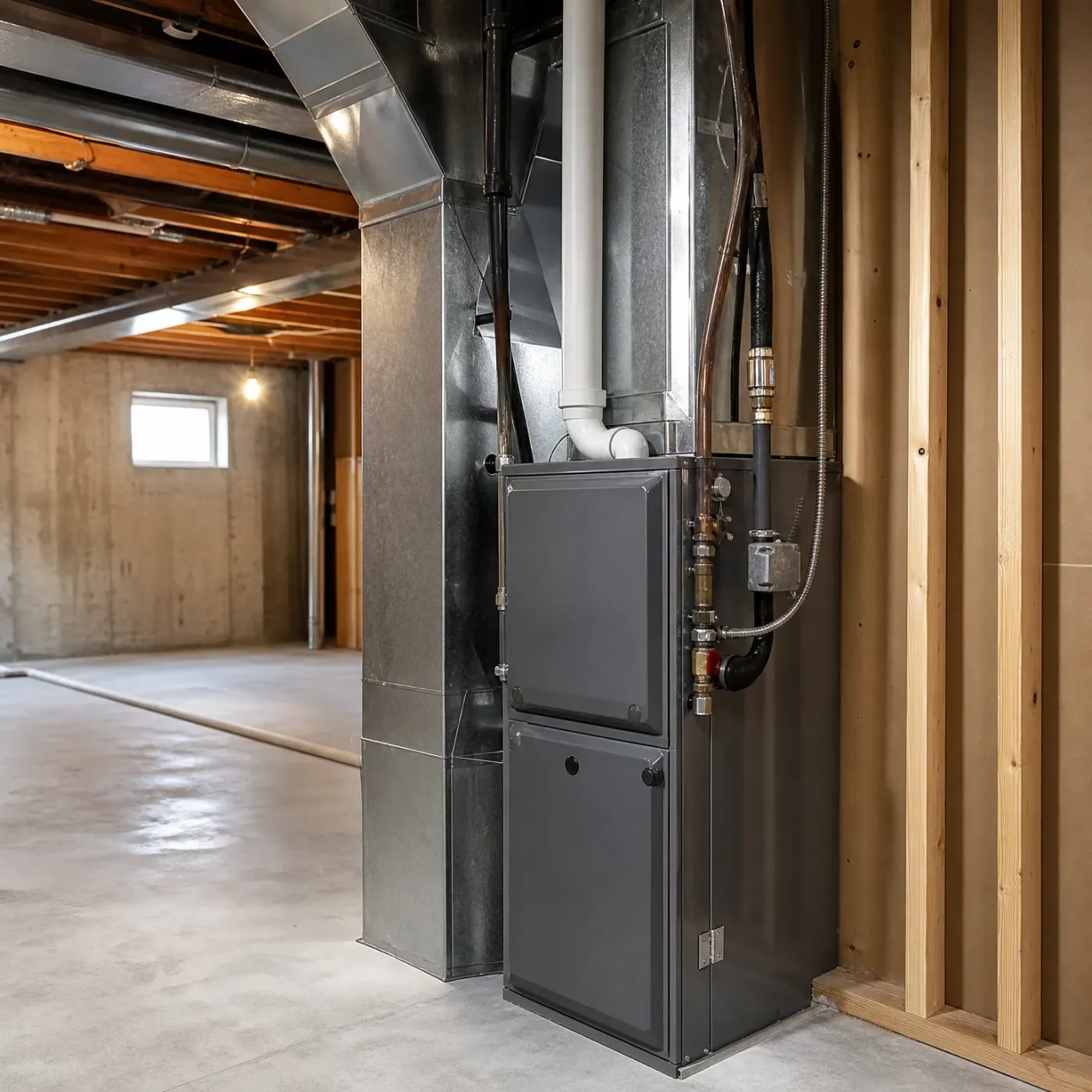
A gray high-efficiency furnace with two access panels stands in a bare basement corner, connected to sheet-metal ductwork, white PVC vent pipes, and flexible gas and electrical lines.

Short cycling wears parts out fast

If your furnace shuts off before the house warms up, then kicks back on a few minutes later, it's short cycling. That's often a cracked heat exchanger or a clogged filter choking airflow, and either way the burner and igniter are starting up far more often than they should. Each start puts wear on the igniter and the ignition control board. A furnace doing this in November is unlikely to make it to March without those parts failing outright.

A gas furnace with metal ductwork, copper and yellow gas piping stands against a wall in an empty room with a bare concrete floor.

Yellow flame instead of blue

A gas furnace should burn with a steady blue flame. If you open the panel and see yellow or flickering orange, the gas isn't burning clean, and that points to a dirty burner or a venting problem pulling in too little air. It can also mean carbon monoxide is forming. This isn't a wait and see sign. A furnace burning yellow needs a contractor to look at the burner and venting before you run it again, not after the next cold snap.

A closed dark laptop and a ceramic mug of coffee on a wooden dining table, with wooden chairs, a dark kitchen cabinet with cutting boards and a potted plant, and a leafy plant by a window in the background.

What a dying furnace does to your house and your week

If your furnace is struggling, you'll feel it in the rooms farthest from the unit first. They stay cold while the thermostat says the house is warm. You'll notice the burner running longer to get the same heat, and with electric rates in Massachusetts among the highest in the country, that shows up fast. A furnace that can't keep up doesn't fail quietly. It fails on the night it's fifteen degrees out and you're calling around trying to find someone who can come that day.

That's the part worth avoiding before it happens. Instead of searching through contractors, calling a few, explaining the same short cycling or weak airflow to each one, and sorting through quotes that don't tell you much until someone's actually looked at the unit, you get matched with one licensed furnace contractor local to your part of Massachusetts. Someone who's already been inside plenty of furnaces like yours this winter and knows what tends to go first. You explain it once, to the person who's coming to fix it.

Interior corner with a beige sofa holding a dark green and a light cushion and a textured throw, a potted small-leaved tree beside a white-framed window, and a dark shallow bowl on a wooden coffee table in the foreground.
A gray high-efficiency furnace stands on a concrete basement floor beside sheet-metal ductwork, with white PVC vent pipes and a black flexible line running up to exposed wood floor joists, next to a wood-framed post against a concrete wall.

Furnace running as it should

Even heat, burner cycles on and off at normal intervals, and the flame through the sight glass burns steady blue. No rattling in the ductwork, no soot around the cabinet, no smell of gas near the unit. It brings the house up to temperature and shuts off until the thermostat calls again.


A beige metal furnace with a louvered front panel stands on a concrete floor against a concrete wall, connected to galvanized sheet-metal ductwork and a metal pipe.

Furnace in trouble

Rust on the cabinet or flue pipe, a yellow or flickering flame, or a burning smell when it kicks on. It might run longer than it used to, or shut off before the house warms up. Black iron gas lines and old ductwork around it don't mean failure on their own, but the furnace itself is telling you something.

A gray-haired man in a dark sweater sits on a light gray sofa in a living room, looking toward a sunlit window with trees outside.
A gray-haired man in a dark blue sweater sits on a light gray sofa in a sunlit living room, looking off to the side, with a potted plant, shelving unit, and large glass doors behind him.
A bearded man with graying hair in a dark green sweater sits on a sofa in a living room, looking off to the side, with a sliding glass door and a dim kitchen doorway behind him.
A gray-haired man in a dark knit sweater sits on a light gray sofa in a living room, looking toward a sunlit window, with houseplants, a lamp, and framed art in the background.
A gray furnace with copper and flexible piping stands against a wood-framed wall in an unfinished basement, connected to galvanized sheet-metal ductwork and PVC venting, with a concrete floor and exposed joists.

One form, no calling around

Only one pro gets your request, so you hear from one company.

Fill out one short form instead of calling around.

Reach a local pro

It costs nothing to send, and you don't have to hire anyone.

Repair it or replace it

Repair

  • A cracked heat exchanger means replacement, not repair, since it's a safety issue and can't be patched.
  • If the furnace is still under warranty, parts repair costs less than paying out of pocket for a new unit.
  • A failed igniter, a bad flame sensor, or a clogged filter are single-part fixes that don't point to a dying furnace.
  • If the rest of the furnace runs quiet and the heat exchanger is sound, one repair now can get you through this winter.
  • A furnace that short cycles because of a dirty filter or blocked vent can go back to normal once that's cleared.

Replace

  • Rust or soot around the burner or cabinet points to a furnace that's breaking down in more than one place.
  • If you're calling for the same problem every few months, you're paying for repairs on a furnace that's not coming back.
  • Rooms far from the furnace staying cold no matter what the thermostat says means the unit can't keep up anymore.
  • A furnace pulling more gas or electricity than it used to is losing efficiency as it ages, and that shows up on the bill.
  • With Massachusetts power rates among the highest in the country, an inefficient furnace costs more every month it keeps running.
  • If a contractor who services this equipment every winter tells you the heat exchanger or control board has failed, that's the end of the line.
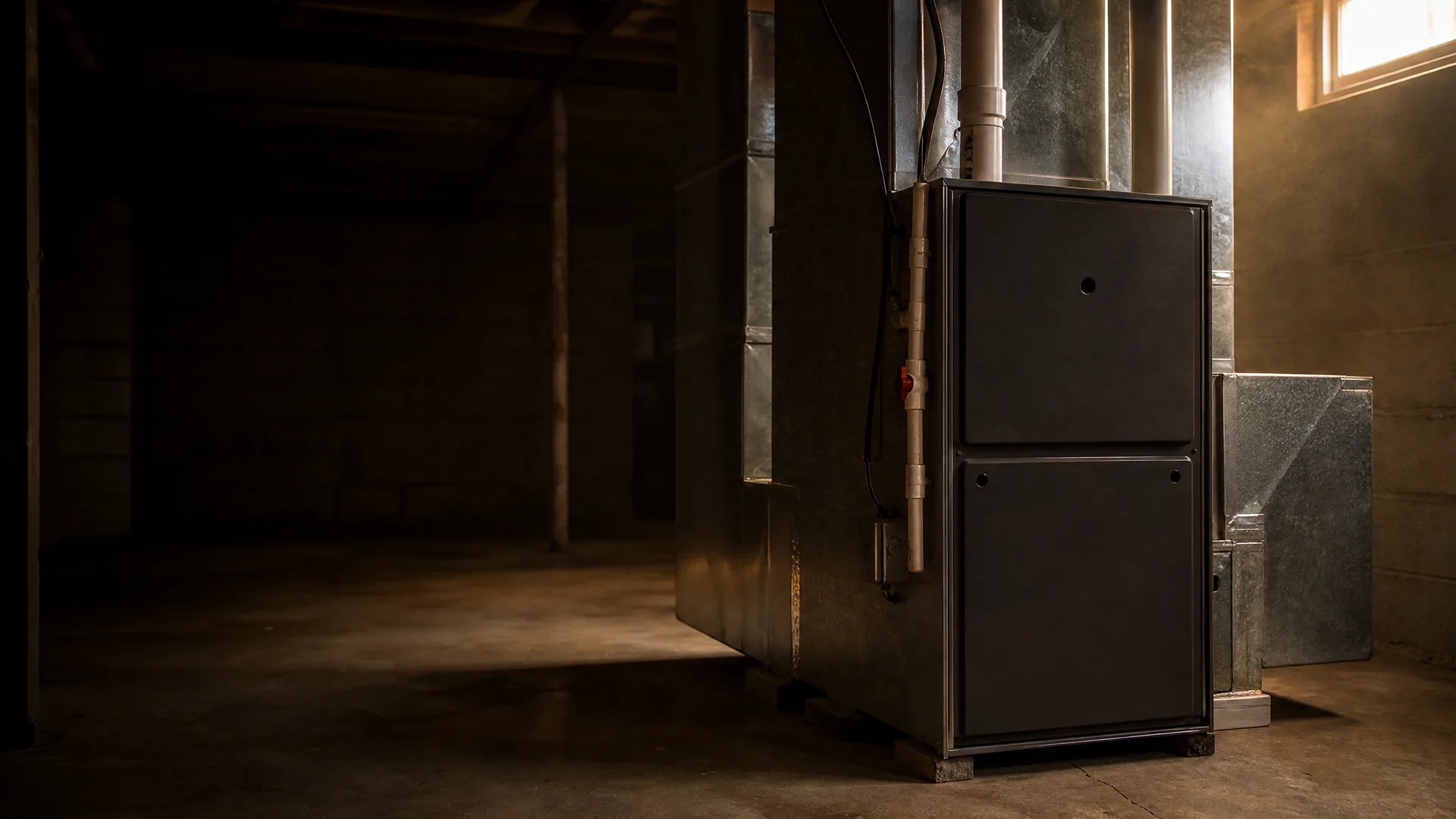
A dark residential basement with a concrete floor and block walls, containing a furnace with two access panels connected to galvanized sheet-metal ductwork and a white vent pipe, lit by a small window at upper right.

You go down to check the thermostat reading against what you're actually feeling, and the basement tells you why. It's past six, already dark outside, and the furnace sits there cold. No hum, no flame glow through the sight glass, nothing. Dust hangs in the air near the cabinet, stirred up by a blower that hasn't run in a while. You press your hand near the vent and feel nothing coming through. Outside it's cold enough that your breath would show. The house is holding whatever heat it had left from this afternoon, and that won't last long in a Massachusetts November.

A gray high-efficiency furnace in a basement with PVC vent pipes, sheet-metal ductwork, copper and insulated pipes, a water heater at left, and an unfinished wood-stud wall at right.
This furnace is doing its job, clean burn, tight connections, nothing to flag in an unfinished basement.
An older beige furnace with louvered front panels stands on a concrete basement floor beside galvanized ductwork, metal and plastic pipes, exposed wood framing, and a cylindrical water heater at right.
Galvanized ductwork and an older cabinet like this one are worth a second look before the cold sets in.
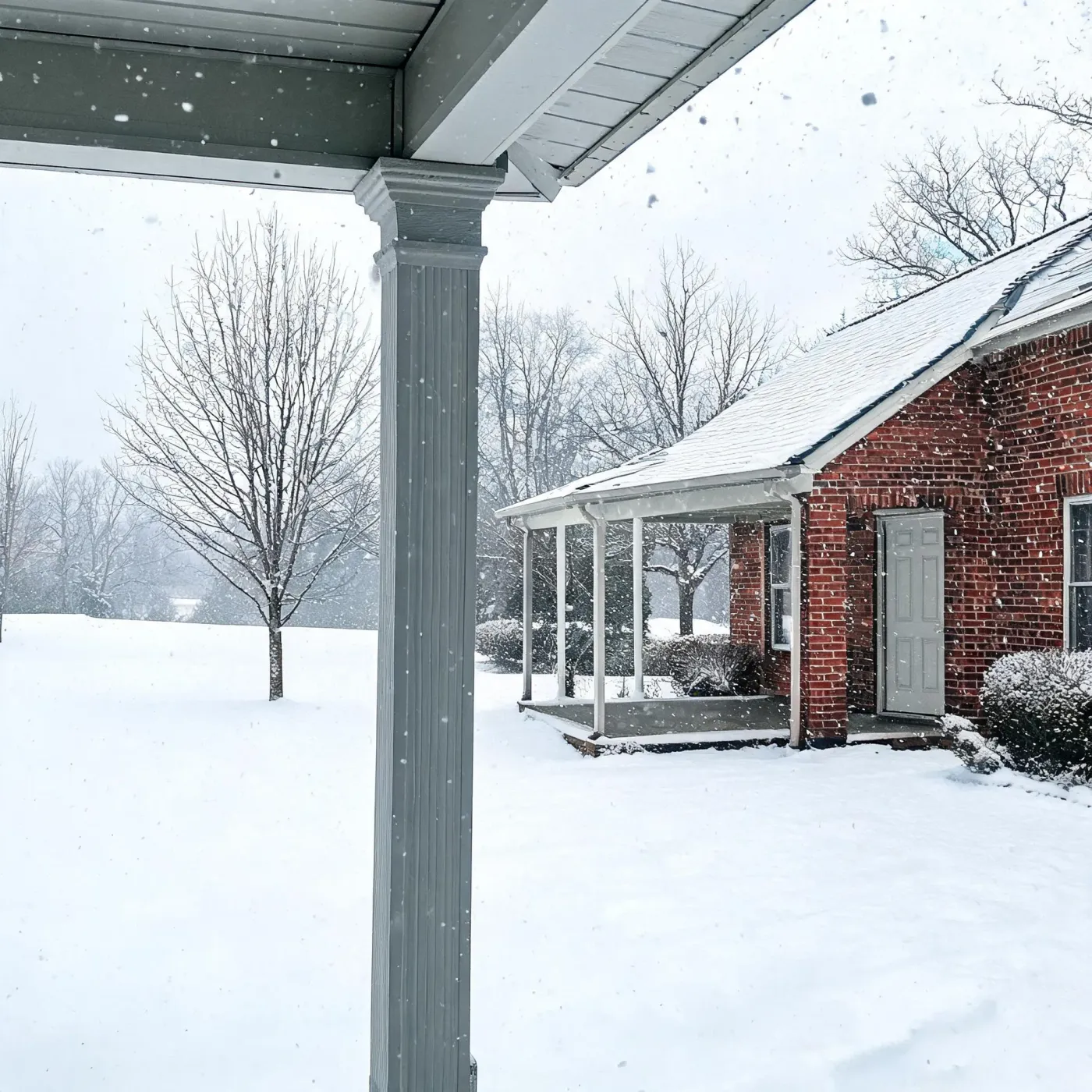
View from under a covered porch with a gray square column toward a red brick house with a white-columned porch and gray door, with falling snow covering the yard, roof, and bare trees.

Winter nights average 21°F statewide, according to NOAA. That's the kind of cold that doesn't let up at 2 a.m., so your furnace is running most of the night just to hold the temperature, not only kicking on for a few minutes here and there. A unit that's already struggling, a weak igniter, a tired blower motor, has no real break to recover in. You'll notice it in the morning: the house takes longer to warm back up, and the furnace sounds like it's working harder to do it. A healthy furnace shrugs off nights like this. One that's on its way out starts showing it right around now.

NOAA nClimDiv 1991-2020 county normals weighted by homes

An older gas furnace with two white PVC vent pipes stands on a concrete basement floor beside galvanized sheet-metal ductwork, flexible conduit, and piping along a wall.
Before you get your furnace repair
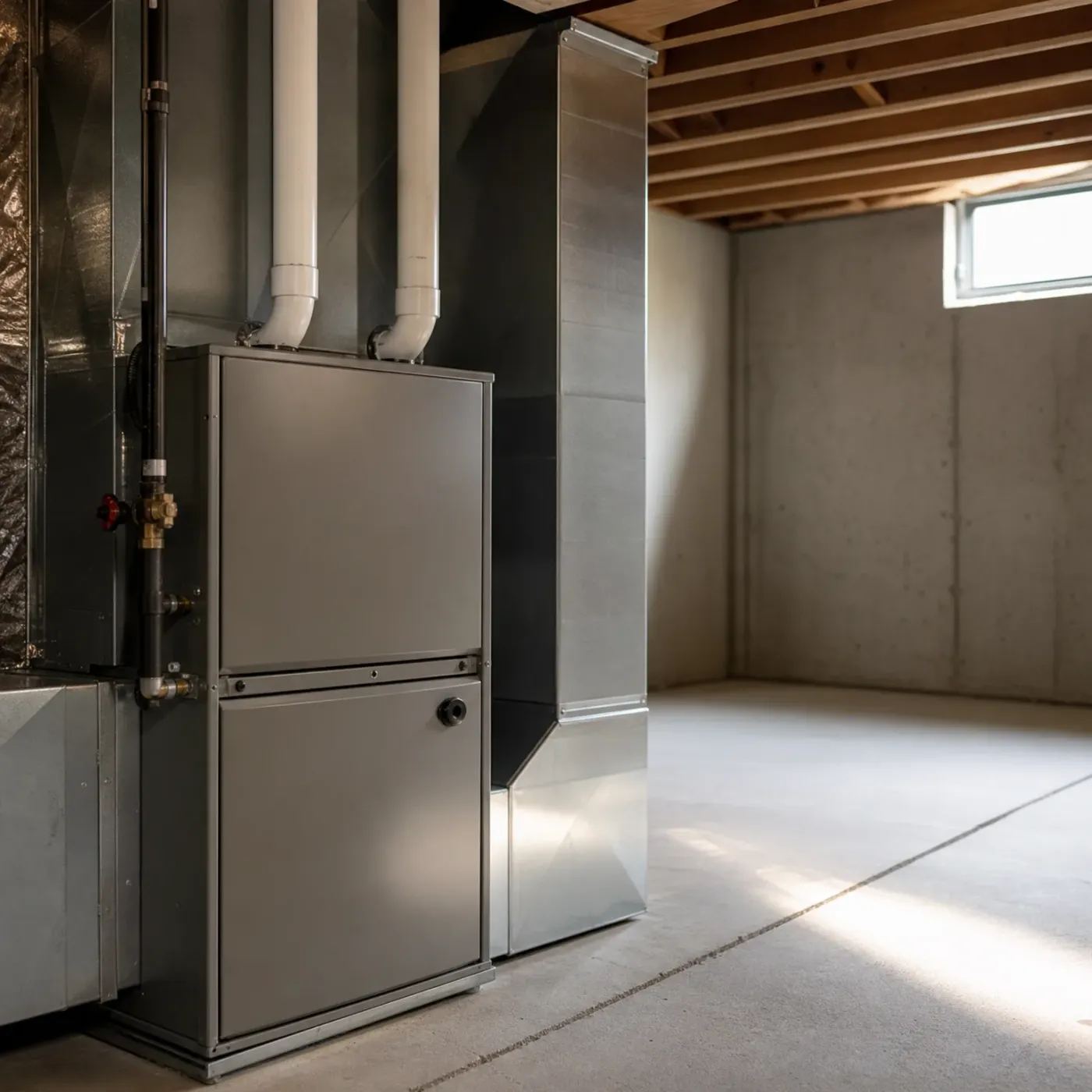
A gray high-efficiency furnace with white PVC venting pipes stands on blocks in a basement next to sheet-metal ductwork, with exposed wood framing on the left and a concrete wall and floor.
After you get your furnace repair

Riding it out versus calling someone now

You can keep nursing a furnace that short cycles or runs long, topping up the thermostat and hoping it holds through the next cold snap. Some winters that works. But a cracked heat exchanger or a failing inducer motor doesn't wait for a convenient week, and Massachusetts doesn't give you much warning before the real cold sets in. The furnace that's limping along in November is the same one that has to carry you through a string of nights in the teens. Waiting costs you nothing right up until the morning it doesn't start, and then it costs you the whole day finding someone who can get to a dead furnace in January instead of on your schedule.

What it takes to get it looked at properly

Finding someone qualified usually means searching around, calling two or three companies, describing the rattling or the smell of gas each time, then waiting on quotes to compare. A local contractor who services furnaces all winter already knows what tends to fail in this kind of cold, a stuck igniter, a heat exchanger that's cracked from years of expanding and contracting, a flame sensor coated in exhaust. Matching you with one licensed contractor means you explain the problem once, not three times, and you're not fielding calls from companies you never asked for. The work still takes as long as it takes. What disappears is the legwork of finding who's going to do it.

Winter nights average 21°F statewide

At 21°F overnight, your furnace isn't cycling off much between midnight and morning. It's running close to flat out to keep the house where you set it. A unit that's already struggling with a weak igniter or a clogged filter has less room to keep up on nights like that.

NOAA nClimDiv 1991-2020 county normals weighted by homes

A furnace that short cycles, runs long, or won't light at all is telling you something, and the signs in this page point the same direction: either it needs a repair or it's closer to the end than you'd like going into a Massachusetts winter. You don't have to figure out which from the basement. A furnace repair contractor local to you sees these same failures every winter, on the same kind of equipment, and knows what a weak igniter or a cracked heat exchanger looks like before it strands you on a cold night. You'll get matched with one contractor, not a handful calling and texting you at once, and that contractor is licensed to do the work. No more sorting through quotes or explaining the same problem three times to three different companies. You already know what your furnace is doing. Now you know someone qualified can look at it and tell you straight whether it's a fix or a replacement, before the next cold snap makes that decision for you.

A gray furnace with PVC vent pipes and sheet-metal ductwork stands against a wall in an unfinished basement with concrete floor and walls, exposed wood joists, and a small window.

Skip the search

Find a licensed furnace pro

Your request stays with one local pro.

No charge to send it. You decide if you hire them.