

How often to change your furnace filter in Massachusetts

A local pro who services furnaces gets in touch about the tune-up.

Get matched

A one inch furnace filter needs changing every 1 to 3 months. Most Massachusetts homes run the furnace from October through April, so that filter is pulling dust and pet hair for seven straight months without a break. A dirty filter chokes airflow, and the furnace runs longer to push the same heat through the house. Check it monthly during those cold months and change it as soon as it looks gray instead of white. Homes with pets or anyone who runs the furnace most of the day should lean toward the one month end of that range. A thicker pleated filter, the 4 or 5 inch kind some furnaces use, can go 6 to 12 months between changes. Either way, the filter is the cheapest thing you can do for a furnace that has to work all winter.

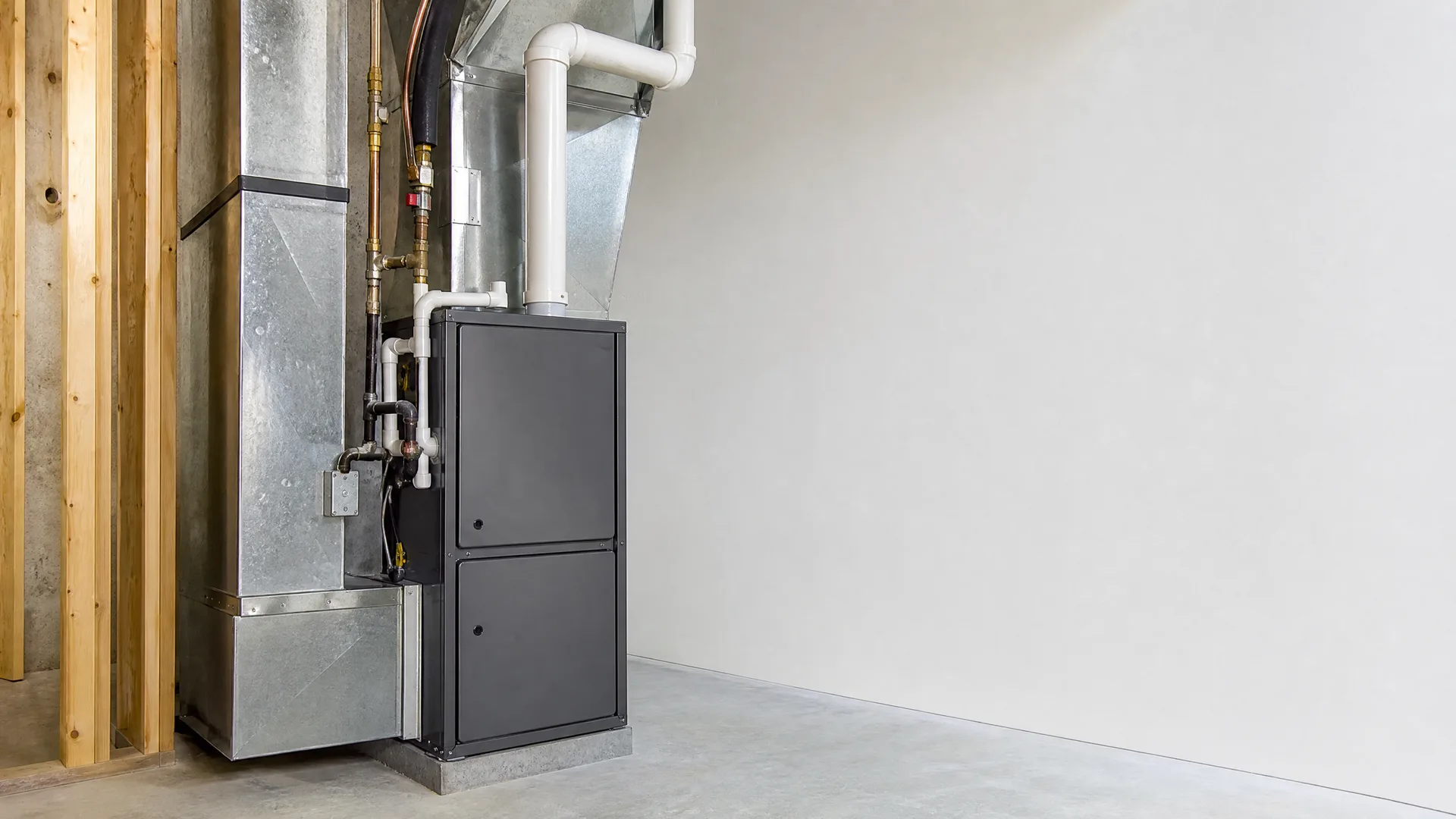
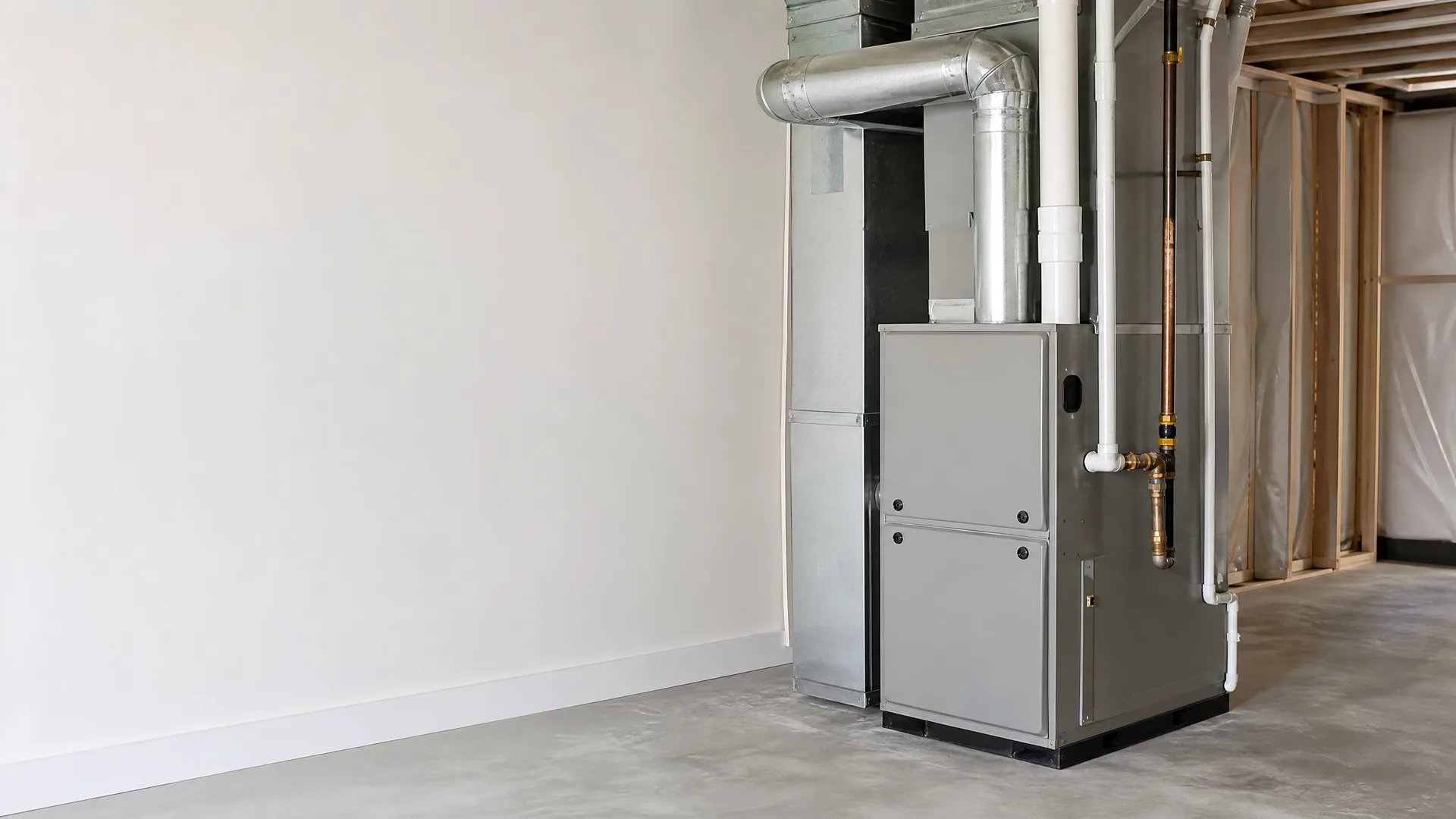
A dark gray furnace connected to galvanized sheet-metal ductwork, white PVC vent pipes and copper piping, standing against a plain light wall in a room with a bare concrete floor and exposed wood framing at left.

Why a clogged filter costs you

Gas furnaces push a set amount of air across the heat exchanger. When a filter clogs, the blower works harder to pull air through it, and that pulls more electricity to do the same job. Massachusetts power rates are among the highest in the country, so a filter you forgot about in December is still costing you through the rest of winter, every time the blower kicks on.

A gray high-efficiency furnace with sheet-metal ductwork, white PVC vent pipes and copper piping stands against a wall in an unfinished basement with a concrete floor and insulated wood stud framing at right.

What a thicker filter buys you

A one inch filter is the thinnest option and the one that clogs fastest, which is why it needs attention every month or two. A 4 or 5 inch media filter holds far more dust in the same airflow path and often goes 6 to 12 months between changes. If your furnace has the slot for one, it is less to remember through a seven month heating season.

Why does my house feel dusty and my furnace run so long?

Run your hand along a windowsill or the top of the TV. If there's a layer of dust back within a few days of cleaning, your filter isn't catching what it should. Check the vents too. Weak airflow at the registers, a furnace that cycles on and off more than it used to, or a system that just runs and runs without the house getting warm are all signs the filter behind it is clogged. Pull it out and hold it to a light. If you can't see light through it, it's long past due. Left in place through a full Massachusetts winter, a clogged filter makes the blower work harder every one of those seven months, and that strain is what eventually takes down the motor itself.

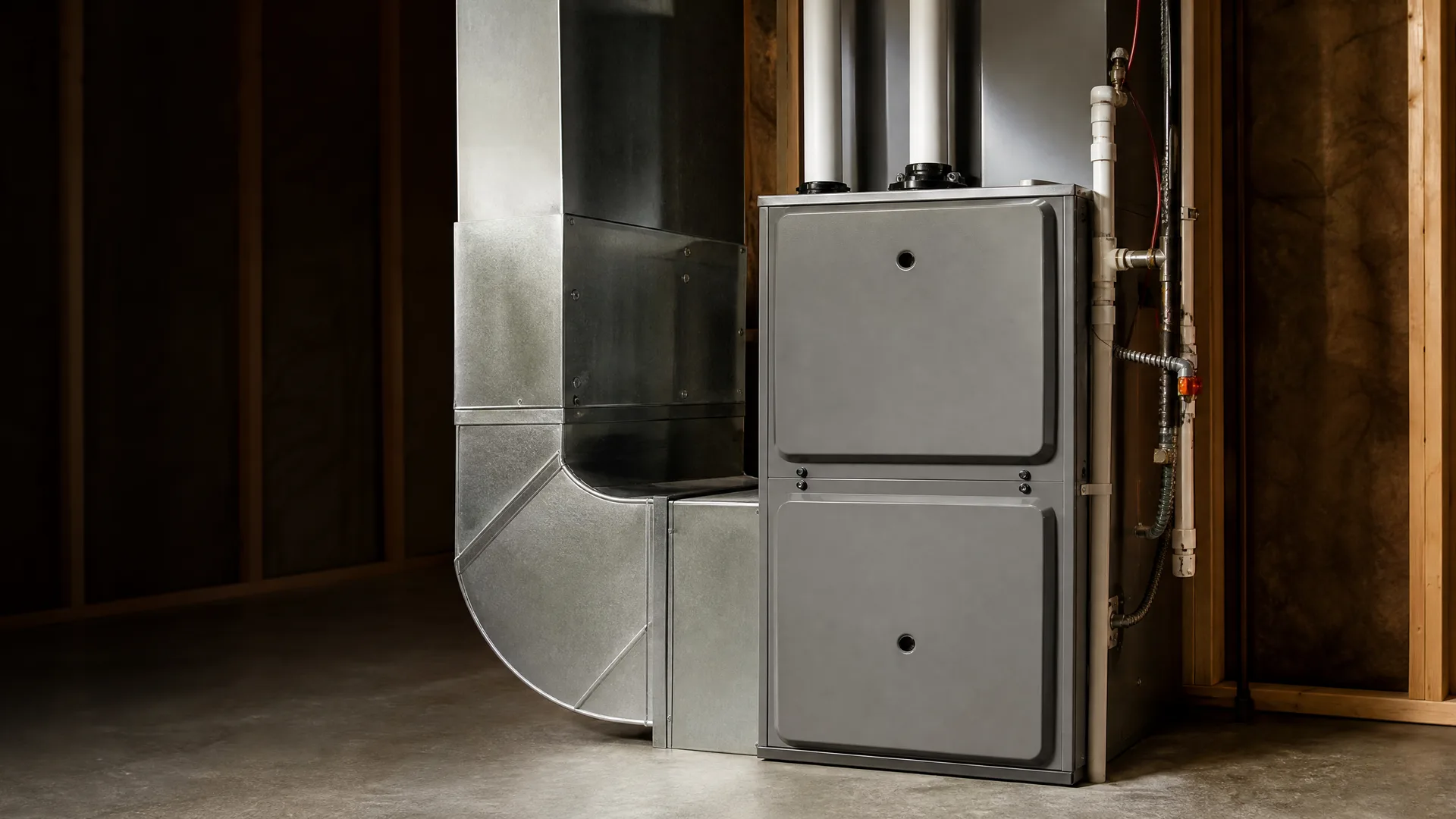
A dark high-efficiency furnace on a concrete pad in a basement, connected to galvanized ductwork, white PVC vent pipes, and copper and black gas piping, with concrete walls and wood framing nearby.

Filter changed on schedule

This furnace pulls air through a clean filter, across the heat exchanger, and out through the PVC exhaust pipe without a fight. The blower runs its normal cycle and shuts off. Gas burns clean because the furnace gets the airflow it was built around.


A gas furnace with a louvered upper panel stands on a concrete pad in a basement, flanked by sheet-metal ductwork, white PVC and metal pipes, and insulated columns.

Filter left too long

Here the blower strains to pull air through a clogged filter, so it runs longer to push the same heat through the ductwork. Dust that should have stopped at the filter settles past it. Some older furnaces will overheat and shut themselves off before the house warms up.

A gray-haired, bearded man in a dark coat dusted with snow stands smiling in a dimly lit room with a lamp, mirror, framed art, and a sofa in the background.
An older man with white hair and a beard, wearing a dark snow-dusted coat and scarf, stands in a warmly lit interior hallway with a framed landscape picture, a table lamp and a potted plant behind him, and a snowy view through a window at left.
An older man in a dark snow-flecked overcoat and scarf stands smiling in a warmly lit home entryway, with a glass-paned door showing darkness outside and a lamp-lit room visible through a doorway behind him.
An older man with gray hair and a beard, wearing a dark snow-dusted jacket and scarf, stands smiling in a warmly lit interior hallway with a lit table lamp, a vase of dried branches, and a framed picture in the background.

One inch filters versus four inch filters

A one inch filter is what most Massachusetts furnaces came with, and it needs changing every 1 to 3 months during a heating season that runs October through April. It's cheap, it's easy to find at any hardware store, and swapping it takes a minute. The tradeoff is that thin filter has less surface area, so it clogs faster and restricts airflow sooner if you forget about it. Seven months of heating adds up fast on a filter that size, especially in a house with pets or anyone who smokes.

Four inch filters trade effort for a longer wait

A four inch media filter, the kind built into some furnace cabinets or added as an upgrade, lasts 6 to 12 months instead of 1 to 3. More surface area means more dust before airflow suffers, so you're not thinking about it every month. The tradeoff runs the other way now. These filters cost more per unit, and not every furnace has the cabinet space to fit one without a contractor adding a filter box to the return duct. If your furnace came with a one inch slot, switching sizes isn't a swap you do yourself.

An older beige furnace with a louvered vent panel stands on a concrete basement floor beside galvanized sheet-metal ductwork, a metal flue pipe and vertical pipes along a concrete wall.
Before you get your furnace maintenance
A beige high-efficiency furnace with white PVC vent pipes stands beside galvanized sheet-metal ductwork in a basement with a concrete floor, exposed wood studs, and metal piping along the wall.
After you get your furnace maintenance

1 to 3 months

That's how often a one inch filter needs changing. Skip it past three months and the blower is working against a clog, pulling more power to move the same air through your ducts.

Reach a local pro

A furnace someone's checked this season

A local contractor who works on furnaces all winter catches a clogged filter, a weak igniter, or a blower strain before it turns into a cold house or a bigger repair.

Reach a local pro
A woman wrapped in a cream textured blanket sits in an armchair beside a lit lamp and a dark window, with an open book in the foreground.
A bearded man in a plaid flannel shirt stands indoors looking out a frost-covered window, with a steaming dark blue mug on the wooden sill and snow-covered trees outside.
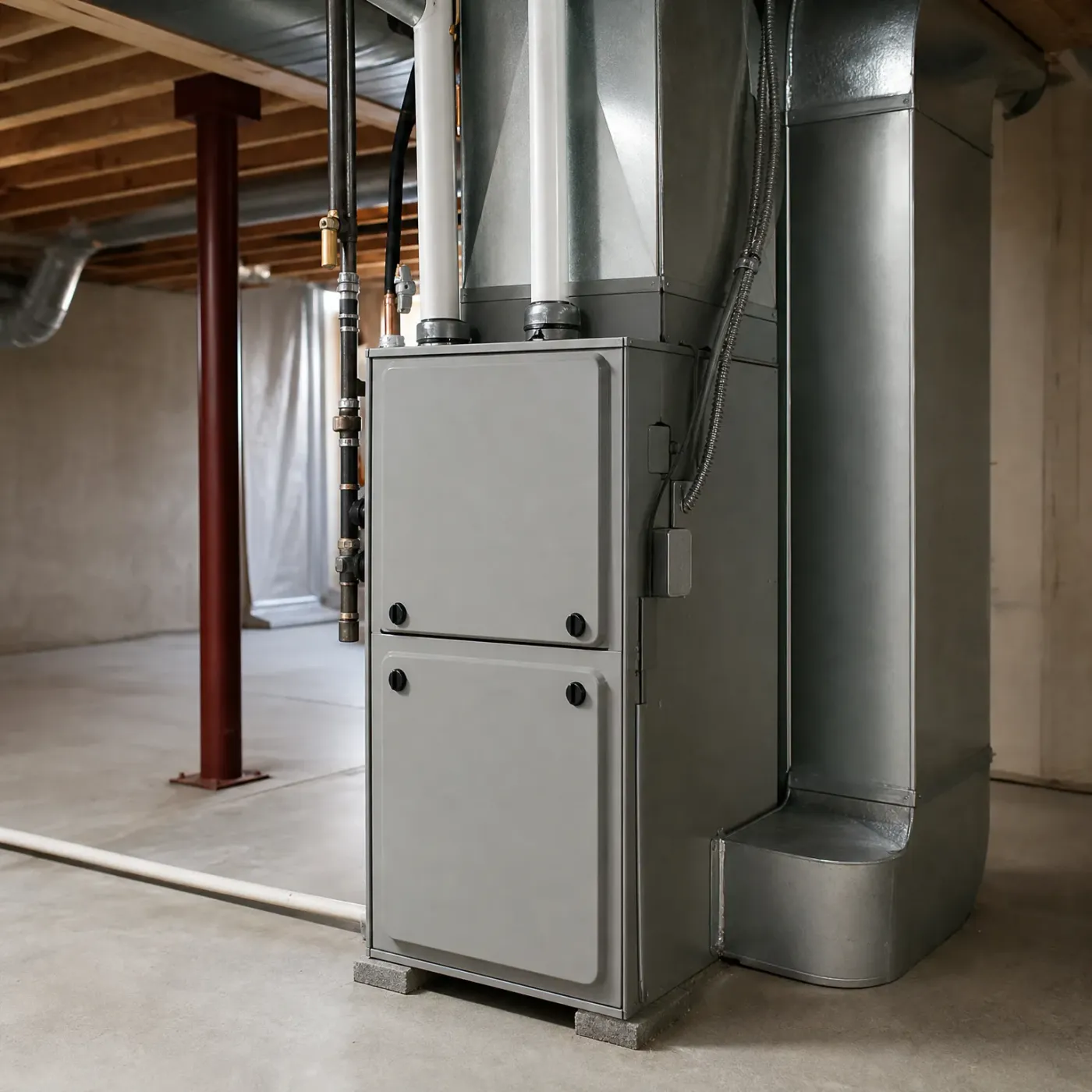
A gray high-efficiency furnace with two access panels stands on blocks in a basement, connected to sheet-metal ductwork, PVC vent pipes, flexible conduit, and gas and water piping, beside a red support column and exposed wood joists.

A pro who works on furnaces

The pro who reaches out is licensed in Massachusetts.

A local pro who knows furnaces gets your details and gets in touch.

Find a licensed furnace pro

Asking costs nothing, and the choice to hire stays yours.

Winter nights average 21°F statewide

21°F is a typical overnight low here in December and January. At that temperature your furnace is cycling on through most of the night, pulling air through the filter for hours at a stretch. A clogged one has to work against that the whole time it's running.

NOAA nClimDiv 1991-2020 county normals weighted by homes

A gray high-efficiency furnace with two PVC vent pipes stands in an unfinished basement beside sheet-metal ductwork, a framed and plastic-covered wall, and a bare concrete wall with vertical pipes.
This furnace is on a clean footing, pulling air through a clear filter and venting straight out the PVC flue.
A gray furnace cabinet in a basement, connected to galvanized sheet-metal ductwork and white PVC pipes, against a concrete wall with exposed metal piping and insulation overhead.
This furnace sits propped on a pallet, a sign something underneath, maybe a clogged drain or condensate backup, already needed attention.

Checking the Filter Yourself vs. Getting It Checked

Checking it yourself

  • Pull the filter and hold it up to a light. If you can't see light through it, it's done.
  • This takes two minutes and costs nothing beyond the filter itself.
  • You'll catch an obviously clogged filter, but you won't see a cracked heat exchanger or a blower motor pulling more current than it should.
  • A visual check tells you about the filter. It doesn't tell you whether the furnace has been running harder than it needs to for weeks already.
  • If you're not sure what you're looking at, a slightly dirty filter and a dangerously clogged one can look similar from across the room.

Having it checked this season

  • A local contractor who works on furnaces all winter knows what a Massachusetts heating season does to a filter and to the blower behind it.
  • They can check static pressure and tell you if the blower is straining, not just whether the filter looks gray.
  • One contractor gets matched to your furnace, so you're not fielding calls from three different companies about the same visit.
  • They'll catch a failing igniter or a cracked heat exchanger before it leaves you without heat on a cold night.
  • They know the equipment that shows up in homes around here, including what tends to fail first when a filter's been neglected.
Gray horizontal lap siding on a building wall with a central downspout, seen during falling snow, with snow-covered ground and bare tree branches above the roofline.

Winter nights average 21°F statewide, according to NOAA climate data. At that temperature your furnace isn't cycling on and off a few times, it's running long stretches to keep up, especially overnight when the house cools down fastest. Every one of those hours, air is getting pulled through the filter. A clean one lets that air move freely and the burner does its job without strain. A clogged one makes the blower fight for every cubic foot, right through the coldest part of the night when you need it working least hard, not most. You'll notice it as a furnace that seems to run almost constantly once January sets in.

NOAA nClimDiv 1991-2020 county normals weighted by homes

A woman stands in the open black front door of a white-sided house with a dark shingled roof while a man in a navy jacket approaches along the walkway, with lantern wall lights, a potted shrub, and flowering garden beds nearby.

Change it every 1 to 3 months, and your furnace runs the way it should

A one inch filter, changed on schedule, keeps your furnace pulling air the way it was built to. No extra strain on the blower, no extra pull on your power bill through a Massachusetts winter that asks a lot of that furnace already. That's the whole answer. Check it monthly, swap it by the third month at the latest, and the rest takes care of itself.

If you'd rather have someone else keep an eye on it this season, you can be matched with a local contractor who works on furnaces like yours all winter and knows what tends to go wrong when a filter's been ignored too long. It's one contractor, not a handful calling you back, and they'll reach out directly once you're matched.

A wooden table holding a stone vase with a bare branch, two stacked books and a small dark bowl, beside a window with green foliage outside and a sofa in the dim background.
A gray high-efficiency furnace with two white PVC vent pipes stands in an unfinished basement beside galvanized sheet-metal ductwork, with insulated wood-framed walls and piping behind it.

Get your furnace to the right pro

Step 1 of 3: Equipment