Tell us about the job
Takes about a minute. No obligation.
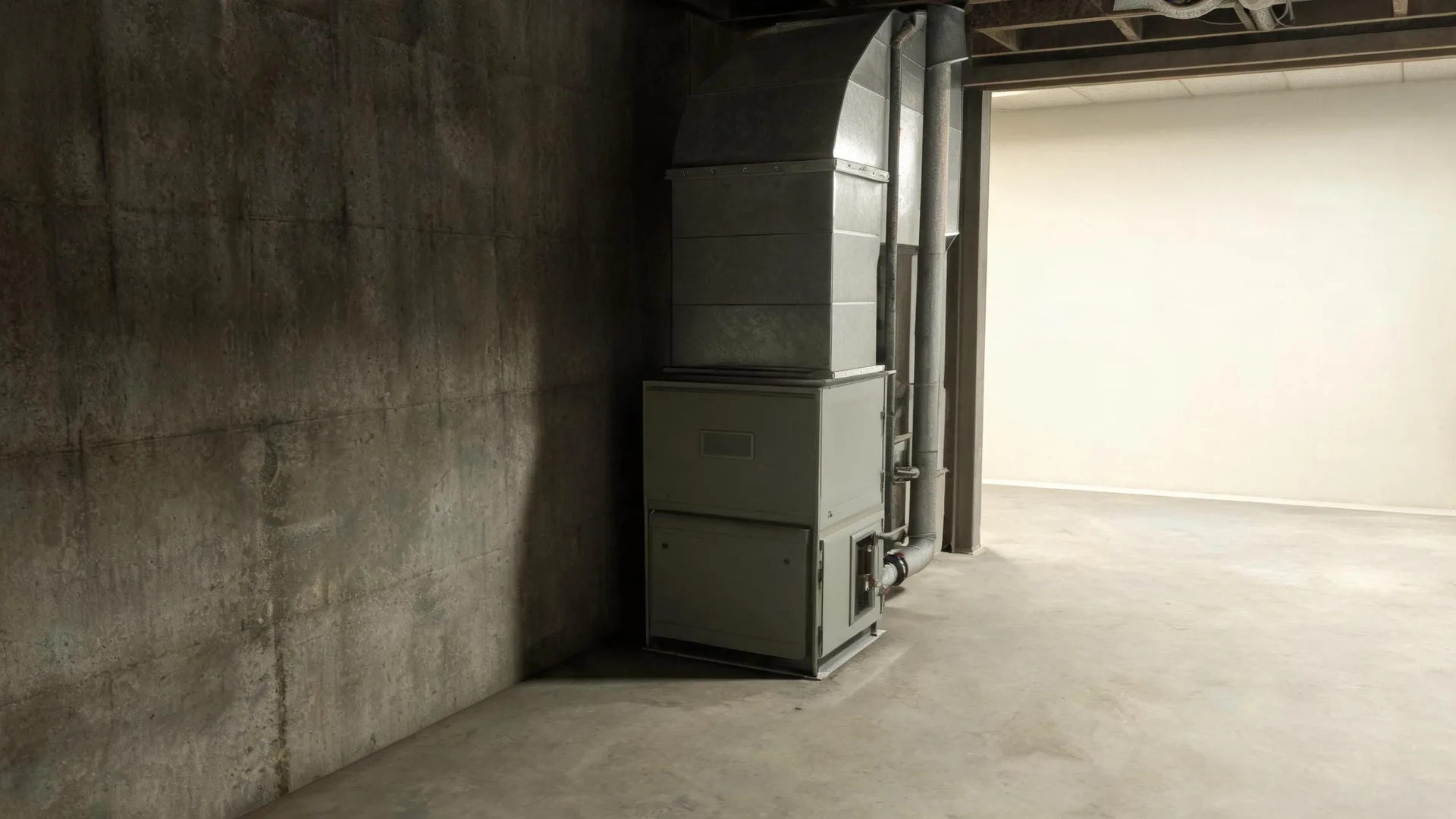
The burner assembly and ignition system on a Hampden County furnace cycle hard every fall, run through winter, and keep firing into late spring. Homes in Hampden County, MA run heat about eight months a year, from October through May. By the time a furnace shows a fault, the heat exchanger and igniter have absorbed years of that repeated thermal stress. A contractor working a repair here checks those components for wear that built up gradually, not just for whatever triggered the service call. A cracked heat exchanger or a degraded igniter is often the real finding behind what looked like a simple lockout.
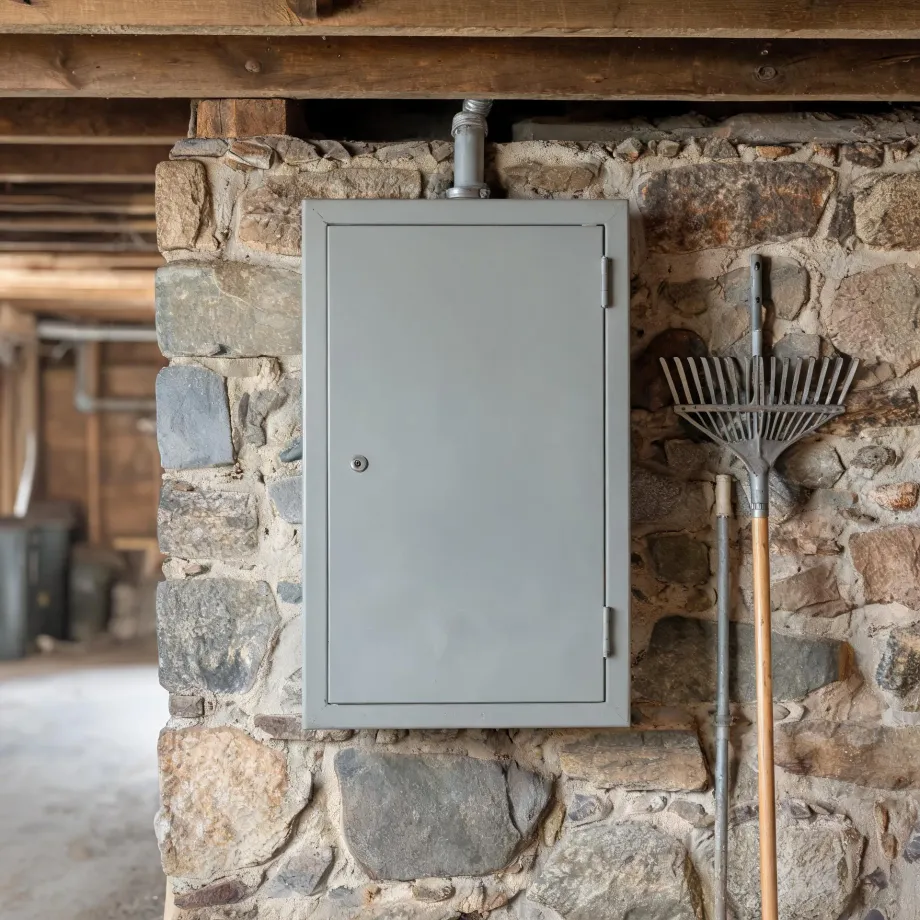
Ductwork and service panels in houses this old were put in for systems that no longer exist. Half the homes in Hampden County, Massachusetts were built in 1959 or earlier (2020-2024 ACS 5-year). When a contractor opens a furnace in stock like this, the question that shapes the repair is whether the heat exchanger, the burner assembly, or the control board it takes are still in production. If they are not, the scope changes fast, and a homeowner who came in expecting a part swap leaves with a different conversation. That is the variable that distinguishes a repair in Hampden County from a routine service call on newer stock.
The Parts of a Furnace a Contractor Checks First
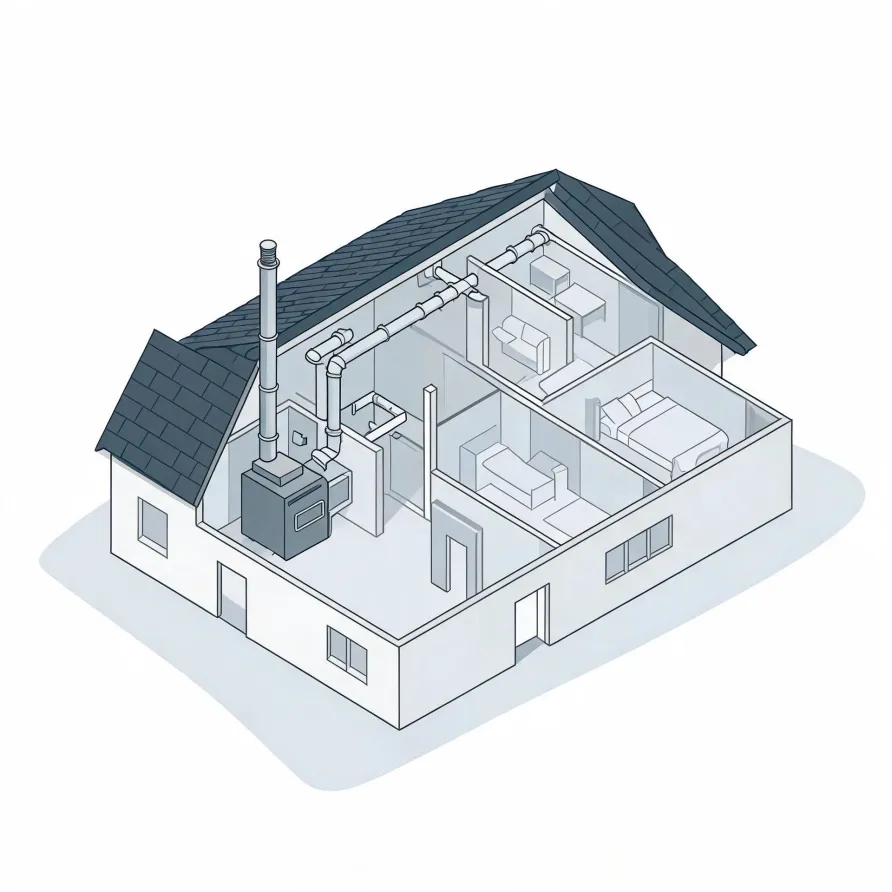
The furnace itself sits in the basement, utility room, or closet and is the first place a contractor looks when something is wrong. Inside it, the heat exchanger and burner assembly are the pieces most often behind a heating failure or a safety concern. The blower motor, housed in the same cabinet, pushes heated air out through the supply side of the system.
The flue pipe runs from the furnace up through the wall or roof and carries combustion gases out of the house. Alongside it, the igniter, flame sensor, and control board each play a role in starting and sustaining a heating cycle, and any one of them can stop that cycle when it fails.
The drawing shows a typical furnace layout, and a licensed contractor determines which parts apply to the setup in your home.
Get matched in Hampden CountyHampden County, by the numbers
335 severe weather events were recorded in Hampden County, Massachusetts between 2015 and 2024.
NOAA National Centers for Environmental Information, Storm Events Database, bulk CSV export, events 2015-01-01 through 2024-12-31.Half the homes in Hampden County, Massachusetts were built in 1959 or earlier (2020-2024 ACS 5-year).
U.S. Census Bureau, 2020-2024 American Community Survey 5-Year EstimatesHampden County, Massachusetts holds 197,591 housing units (2020-2024 ACS 5-year).
U.S. Census Bureau, 2020-2024 American Community Survey 5-Year EstimatesOwners occupy 62.2% of the occupied homes in Hampden County, Massachusetts (2020-2024 ACS 5-year).
U.S. Census Bureau, 2020-2024 American Community Survey 5-Year EstimatesFurnace Repair Rules and Codes for Hampden County, Massachusetts5 sourced standards and regulations
What happens when a contractor comes out
Non-weatherized gas furnaces manufactured on or after November 19, 2015 must reach 80.0 percent AFUE.
Non-weatherized oil-fired furnaces manufactured on or after November 19, 2015 must reach 83.0 percent AFUE.
Mobile home gas furnaces manufactured on or after November 19, 2015 must reach 80.0 percent AFUE.
Non-weatherized gas furnaces manufactured on or after December 18, 2028 must reach 95.0 percent AFUE, up from the 80.0 percent minimum that applies to units manufactured before that date.
Licensing and Legal Requirements in Hampden County, Massachusetts
Massachusetts requires a state licence to work as a refrigeration technician, and to work as a pipefitter or sprinkler fitter.
Severe Weather Events in Hampden County
Extreme weather puts furnaces under strain, and how hard a system works over its lifetime is shaped by local conditions. Repair needs in Hampden County reflect that load.
335 severe weather events, 2015–2024. Source: NOAA National Centers for Environmental Information, Storm Events Database.